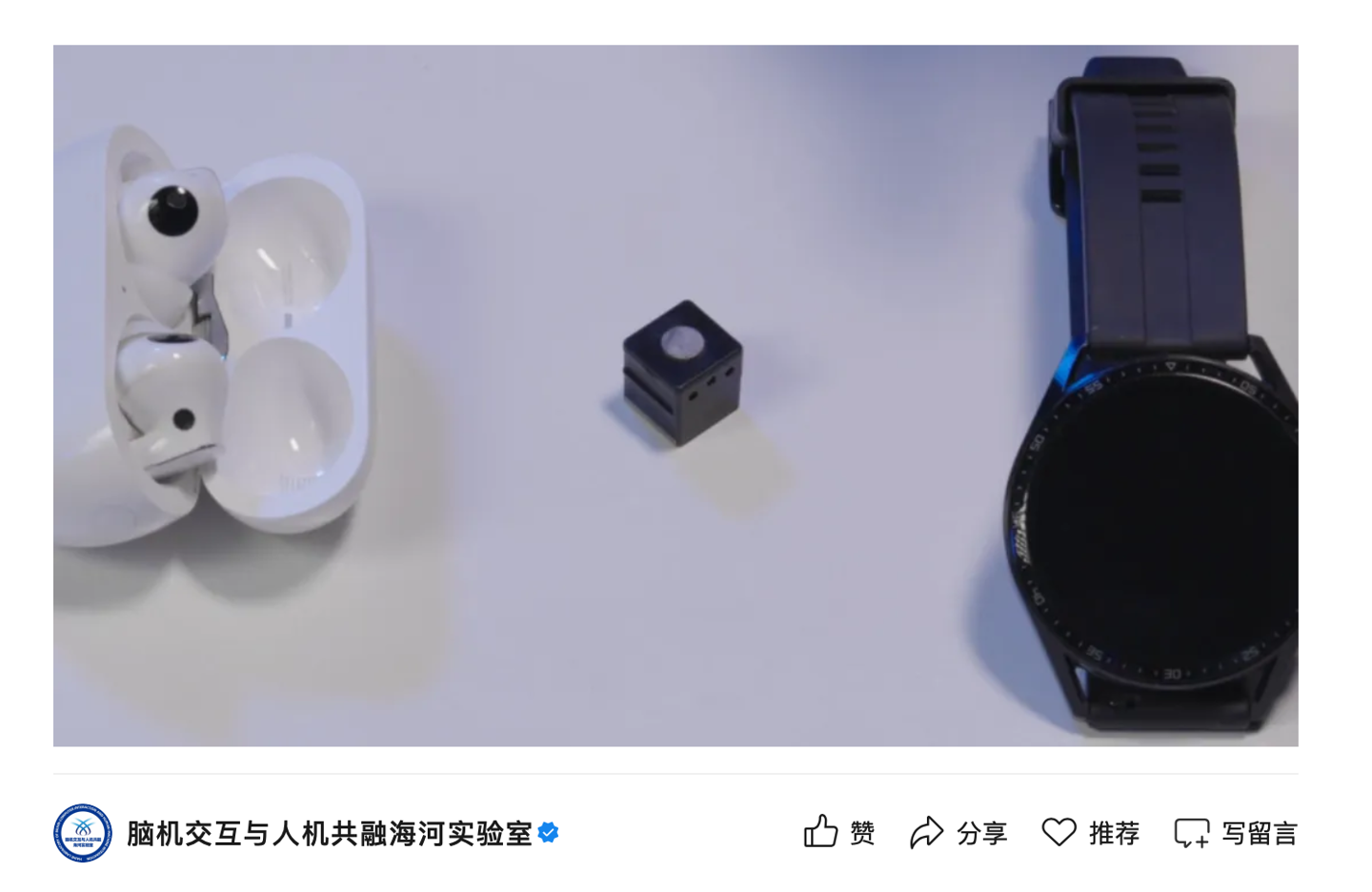
The system, developed by the Haihe Laboratory of Brain-Computer Interaction and Human-Machine Integration at Tianjin University in partnership with Shenggong Diting, weighs only 3 grams. Its volume is less than 2 cubic centimeters, making it the smallest and lightest non-invasive brain-computer interface system currently available.
Unlike traditional head-mounted devices, this unit integrates electrodes, circuits, batteries, and wireless transmission modules into a compact form factor. It attaches directly to the scalp and remains concealed by hair, which allows for near-invisible wearability across medical, consumer, and industrial applications.
The device complies with the GB 9706.226-2021 national medical device standard for signal capture. It operates at a 1000Hz sampling rate and provides 8 to 10 hours of battery life, supporting extended brain-computer interaction tasks.
The research team is currently collaborating with industry leaders and academic institutions to implement the technology. These efforts focus on developing safety management models for special operations and emergency management personnel.