

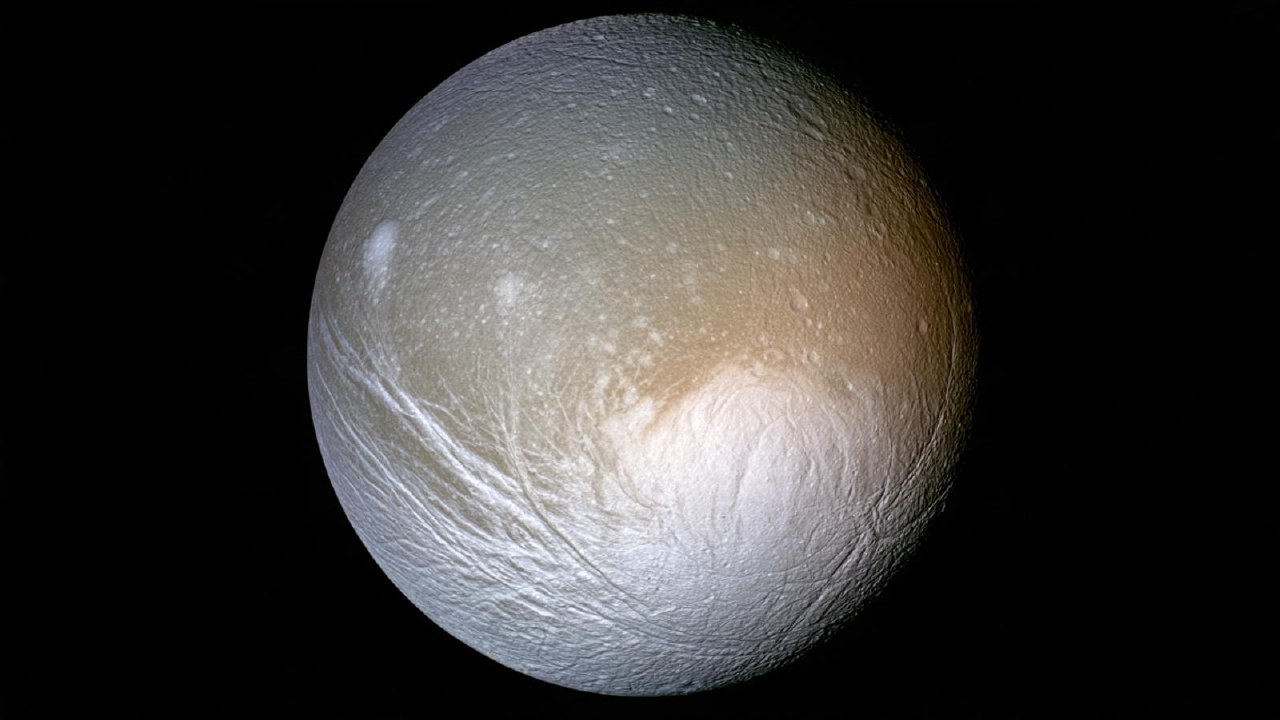
Researchers from the University of Toulouse in France have identified several flight paths for spacecraft to approach Enceladus and collect samples. The study utilizes the circular restricted three-body problem model for the Saturn-Enceladus system.
The team highlighted four primary orbit families as the most viable options. These include near-rectilinear halo orbits around Lagrange points L1 and L2, classic third-period halo orbits, and butterfly-shaped trajectories. The simulation also uncovered previously unknown periodic orbit families.
Maintaining these trajectories requires periodic course adjustments. Depending on the specific orbit and navigation precision, the daily fuel consumption is estimated between 0.37 and 0.83 meters per second. The researchers noted that these paths are largely ballistic, minimizing energy requirements.
The findings provide a framework for future mission planning to Enceladus. The team intends to adapt this methodology for exploring other icy moons with similar mass ratios, such as Mimas, Europa, and Ganymede. Previous studies confirmed that Methanothermococcus okinawensis bacteria can survive in simulated Enceladus environments.



