

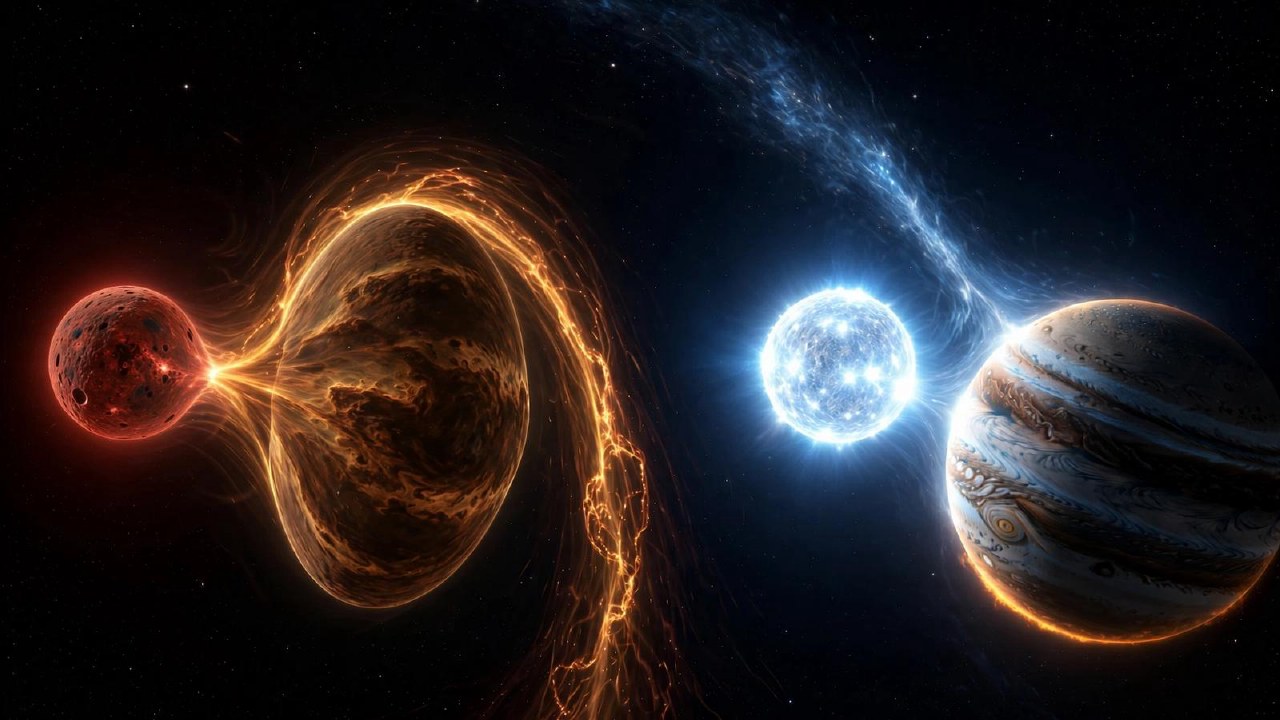
Astronomers have identified two stellar systems where a star gradually consumes material from its orbiting companion. The findings, published in Nature Astronomy, suggest that such interactions can be prolonged rather than instantaneous.
In the first system, ZTF J0440+2325, a red dwarf pulls matter from a brown dwarf. The objects orbit each other every 87 minutes. This represents the first direct observation of stable mass transfer from a substellar object to a main-sequence star, a process that could potentially last for billions of years.
The second case involves a white dwarf, HS 0209+0832, which shows signs of consuming the atmosphere of a gas giant. The white dwarf's atmosphere contains heavy elements like zinc, copper, and niobium, but lacks silicon and iron. The system exhibits brightness variations every 4.399 days.
Researchers classify the gas giant as a potential second-generation planet. It may have formed from material ejected during the host star's final evolutionary stages. The white dwarf currently heats the planet, causing its atmosphere to evaporate and accumulate on the star.



