

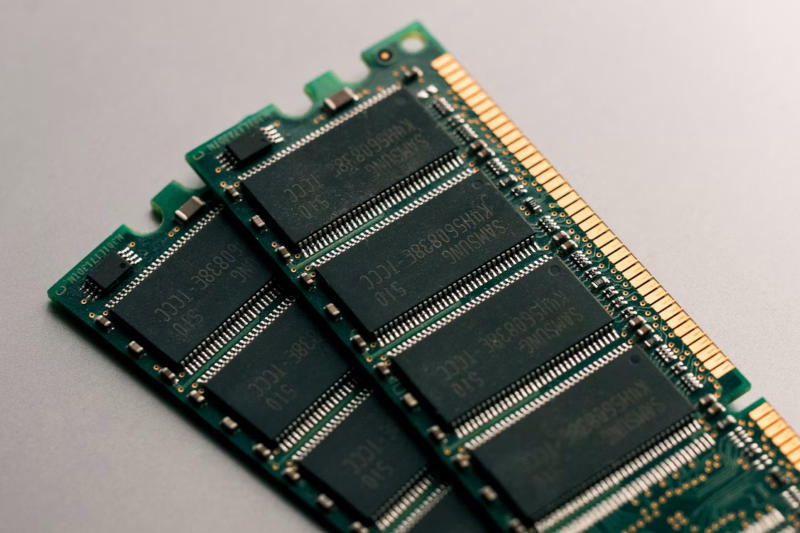
Researchers in China have developed a new material structure for memory chips that achieves a lifespan of approximately 10 billion write cycles. This performance is 100 times higher than the previous reliability limit observed in similar technologies.
The study focused on ferroelectric materials with a wurtzite crystal structure, specifically scandium-doped aluminum nitride (AlScN). These materials are valued for their compatibility with existing semiconductor manufacturing processes, low energy consumption, and high switching speeds.
Previous AlScN-based chips typically failed after 100 million cycles. The research team identified the root cause of this degradation as the migration and clustering of nitrogen vacancies within the crystal lattice, which create conductive paths leading to current leakage.
By modifying the material structure to restrict the movement of these nitrogen vacancies, the scientists successfully prevented the formation of leakage channels. This advancement could enable the use of AlScN-based memory in future server hardware and artificial intelligence systems if the technology is scaled for mass production.

