

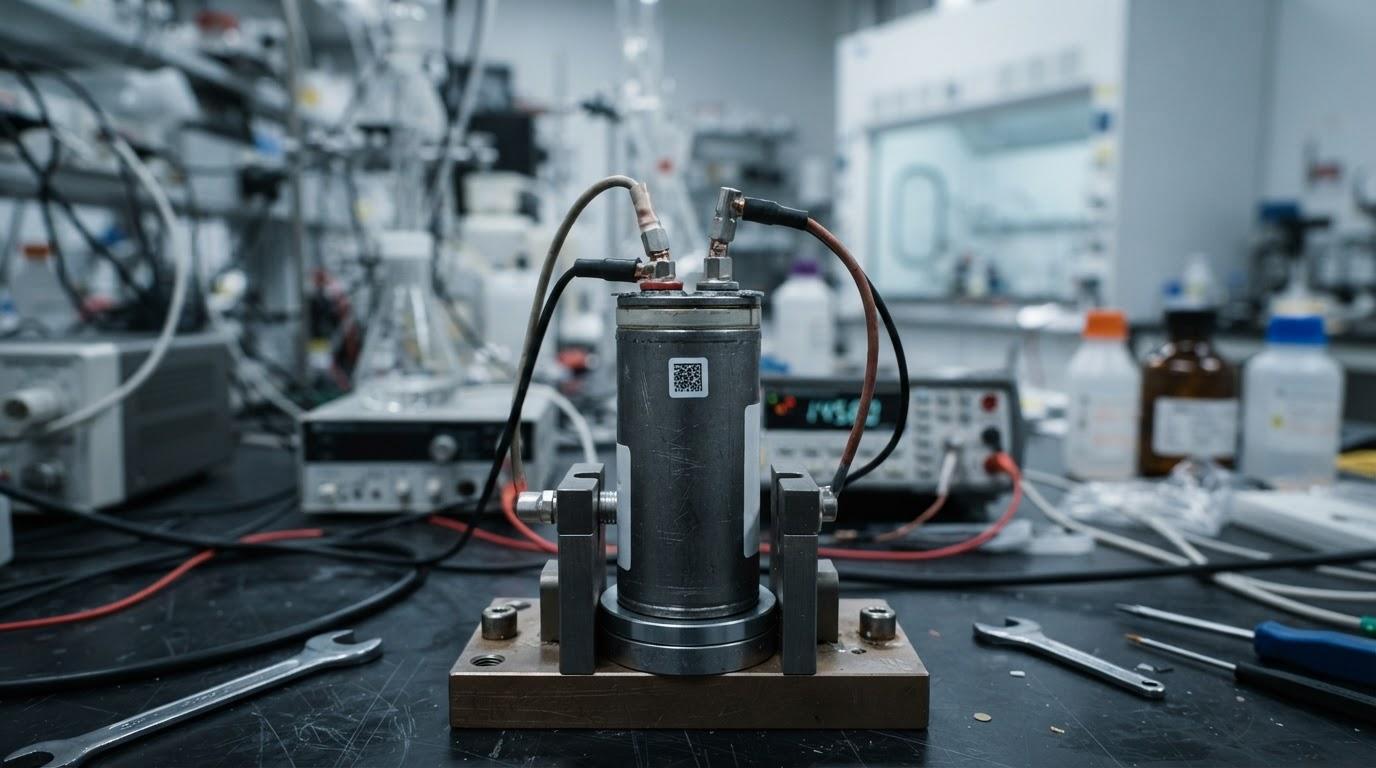
Researchers from Vanderbilt University and the University of Maryland have introduced a new chemical approach for lithium-sulfur batteries. By incorporating chlorine, the team enabled sulfur to participate in a three-electron reaction, which increases both energy capacity and operating voltage.
Experimental tests showed sulfur capacity increased by approximately 58%, while average voltage rose from 2.05 V to 2.54 V. The specific energy density of the active sulfur material exceeded 1,700 Wh/kg. When accounting for the entire battery stack, the potential energy density is estimated at 477 Wh/kg, a 37% improvement over traditional systems.
To ensure the reaction remains reversible, the team used molecular modeling to select an electrolyte that prevents sulfur-chlorine compounds from dissolving and migrating to the lithium anode. Spectroscopic analysis confirmed that sulfur successfully undergoes this additional chemical state across multiple charge-discharge cycles.
The researchers tested the technology in a single-layer pouch cell, which retained 78% of its initial capacity after 100 cycles. Despite these results, commercialization remains distant, as the current prototype relies on metallic lithium and requires an excessive amount of electrolyte for practical mass production.

