

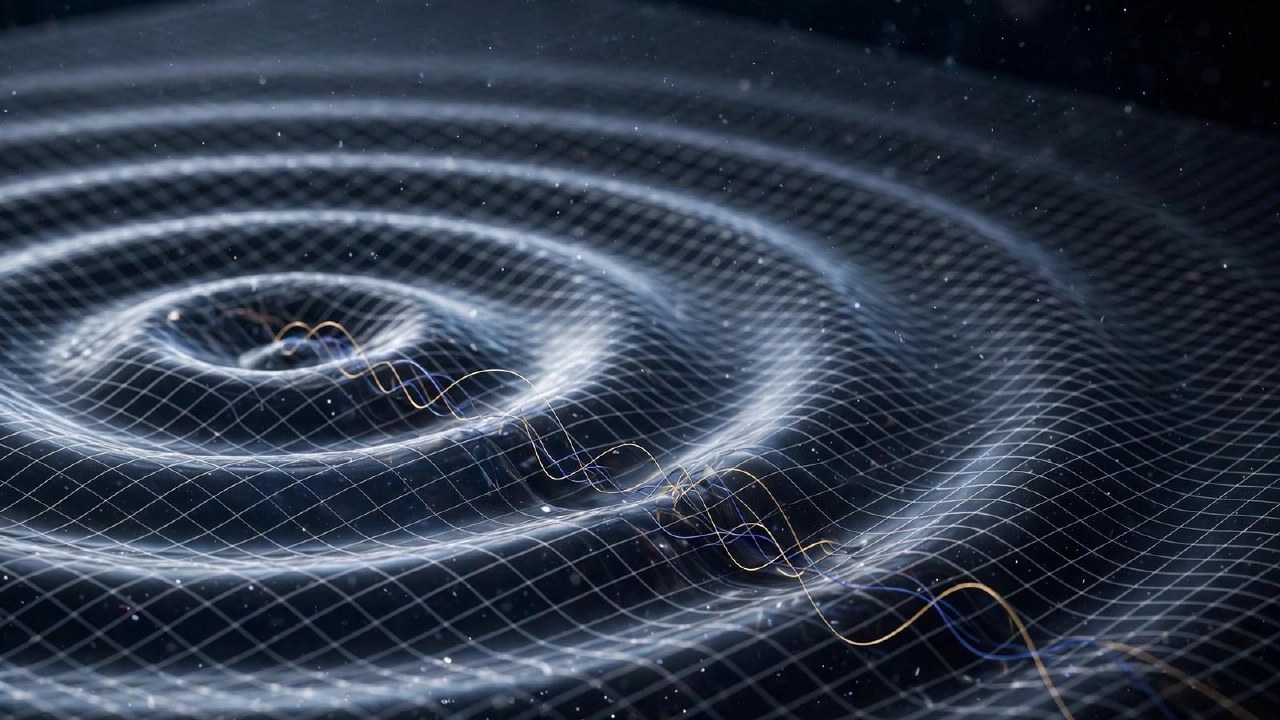
Physicists tested whether machine learning could identify deviations from Einstein's General Theory of Relativity in gravitational wave signals. The experiment utilized real noise data from the LIGO H1 detector and the historical GW150914 black hole merger event to evaluate a hybrid neural network classifier.
The model was trained to distinguish between standard signals and those with artificial amplitude, phase, and frequency modulations, controlled by a dimensionless parameter beta. At beta values of 0.5 or higher, the neural network performed flawlessly in detecting these deviations.
Performance dropped significantly as the parameter decreased. At beta approximately 0.25, accuracy was 75 percent, while at beta 0.2 or lower, the classifier's accuracy fell to 51.7 percent, effectively matching random chance. The model's loss remained at approximately 0.693 throughout training.
The analysis revealed that the classifier ignored standard deviation and root mean square values, assigning them zero importance. Instead, it focused on amplitude distribution tails, which concentrate energy near the merger event. This indicates that pure machine learning struggles to detect subtle effects without classical filtering.

