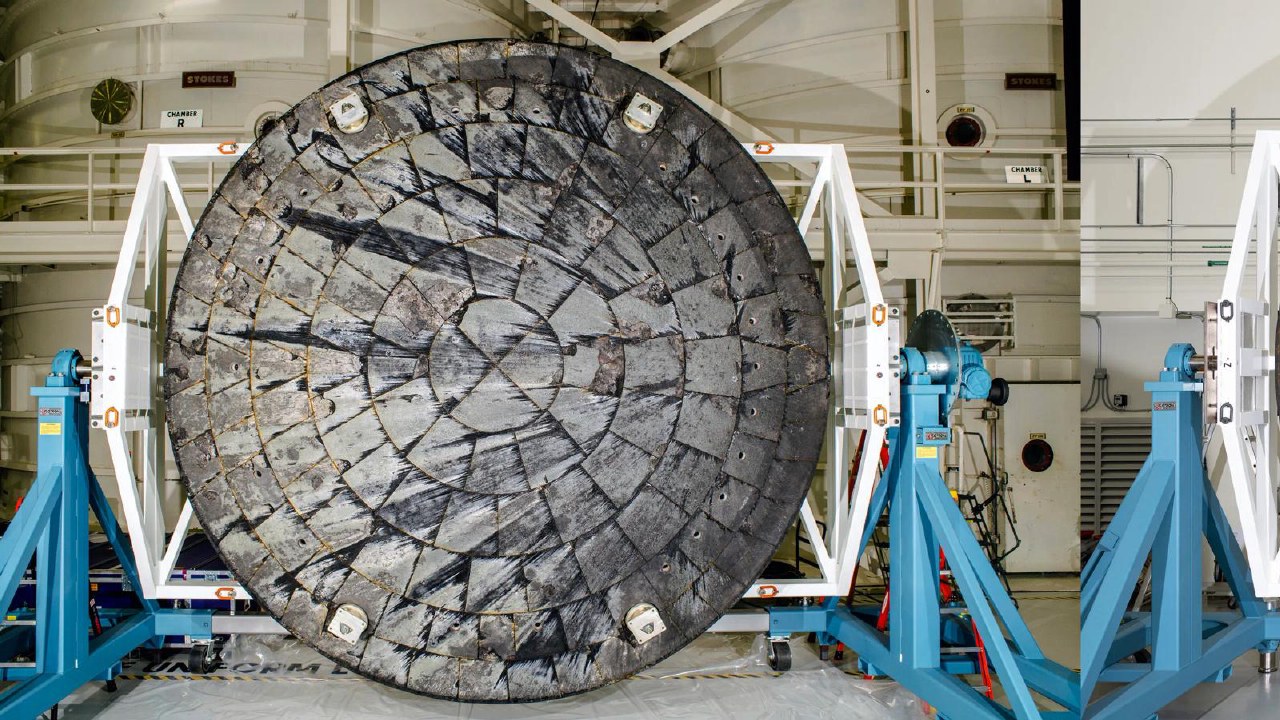
NASA has completed its analysis of the Orion spacecraft's heat shield following the Artemis II mission, which carried four astronauts around the Moon earlier this spring. The evaluation confirmed that the shield performed as expected during atmospheric reentry, providing critical data for future lunar flights.
During the return, the spacecraft reached speeds of approximately 47,800 km/h, with external temperatures exceeding 2,200 degrees Celsius. Despite the intense heat, the internal cabin temperature remained stable at about 24 degrees Celsius. Orion landed in the Pacific Ocean just 0.95 km from its target site near San Diego.
To address issues identified during the uncrewed Artemis I mission, NASA adjusted the reentry trajectory to minimize exposure time to high temperatures. This change proved effective, reducing material loss and cracking by approximately tenfold, with nine affected areas compared to 103 on the previous mission.
The heat shield consists of 186 blocks of Avcoat ablative material, supplemented by 1,300 ceramic tiles on the sides. NASA utilized visual inspections, laser scanning, and X-rays to assess the condition of the shield. For the upcoming Artemis III mission, engineers have already modified the design to improve the uniformity of the Avcoat blocks.