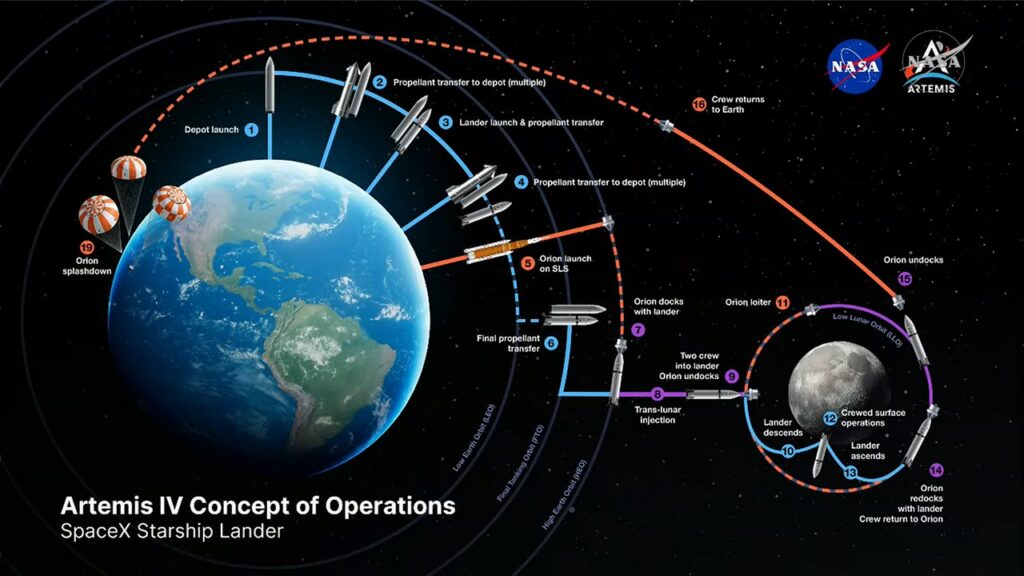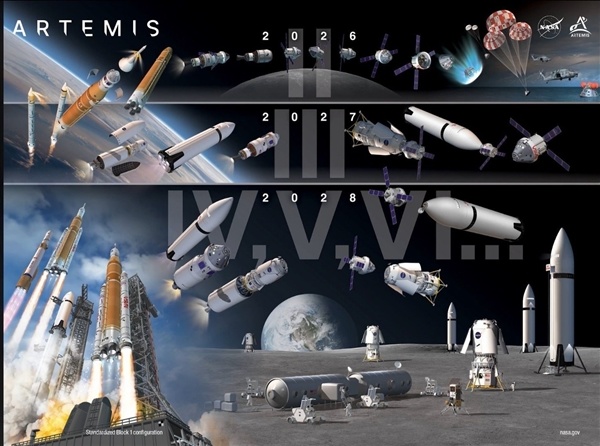
NASA Administrator Jared Isaacman announced the Artemis acceleration plan at the Kennedy Space Center on October 23. The agency aims to return astronauts to the lunar surface within two years. The Artemis 4 mission remains scheduled for 2028, targeting a landing near the lunar south pole to establish a long-term base and support future Mars missions.
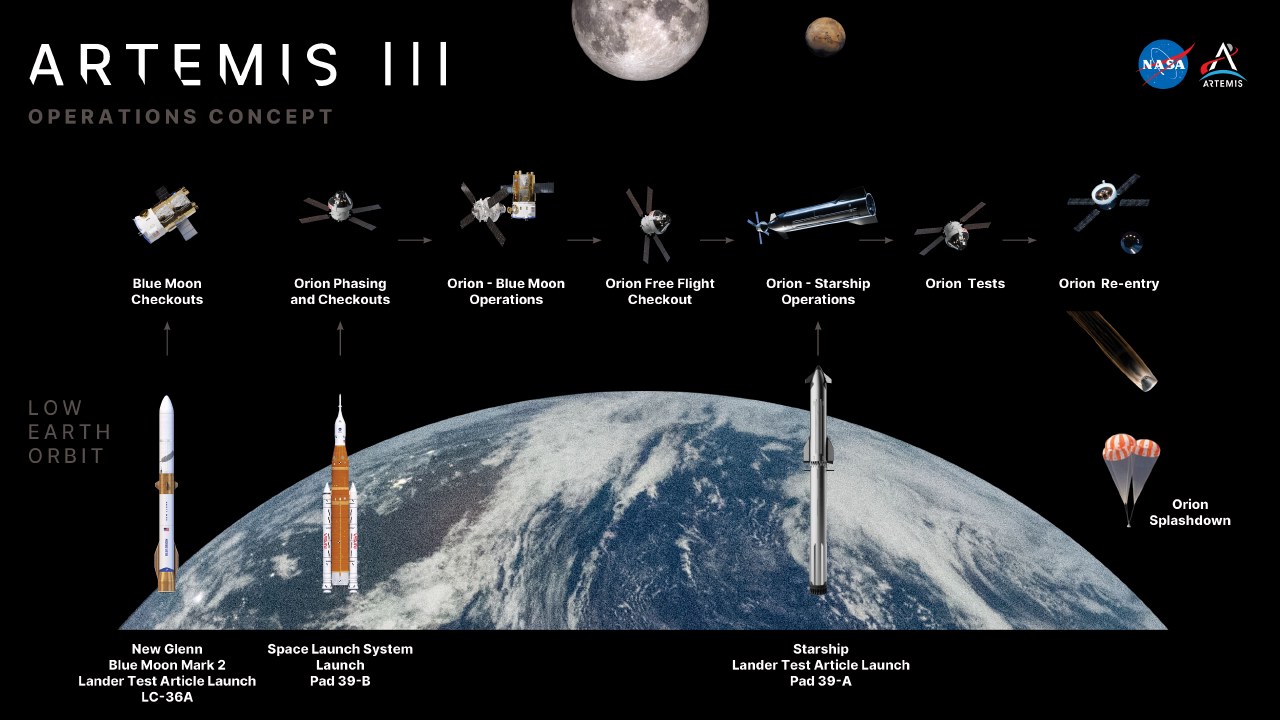
The Artemis 3 mission, originally intended for a lunar landing, has been repurposed as a risk verification mission in low Earth orbit for the summer of 2027. Four astronauts will spend 14 days aboard the Orion spacecraft. The mission will utilize three heavy rockets to launch three separate spacecraft to test docking and life support systems.
The first phase involves Blue Origin launching a test version of the Blue Moon Mark 2 lander into a 440-kilometer circular orbit, where it can remain for up to 30 days. Orion will dock with the lander, allowing the crew to evaluate the cabin environment and life support systems over two days.
The second phase includes a docking demonstration with a SpaceX Starship Version 3 test unit. Astronauts will not enter the Starship, focusing instead on flight control, communication, and docking dynamics. Finally, the crew will spend five days conducting biological experiments and testing lunar sample return procedures before splashing down in the Pacific Ocean.