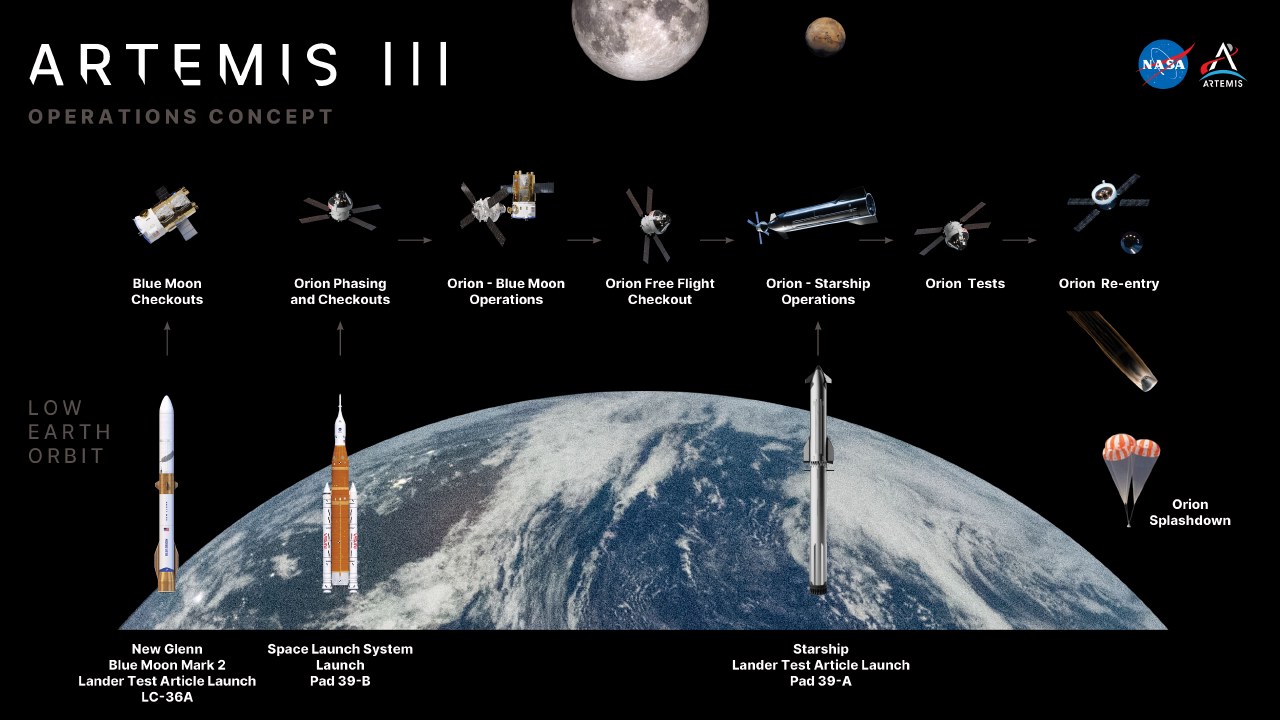
NASA has updated its Artemis lunar program, aiming for a near-Earth docking demonstration in the summer of 2027 and a crewed lunar landing via the Artemis 4 mission in 2028. The agency has revised mission profiles for both SpaceX and Blue Origin to reduce operational complexity.
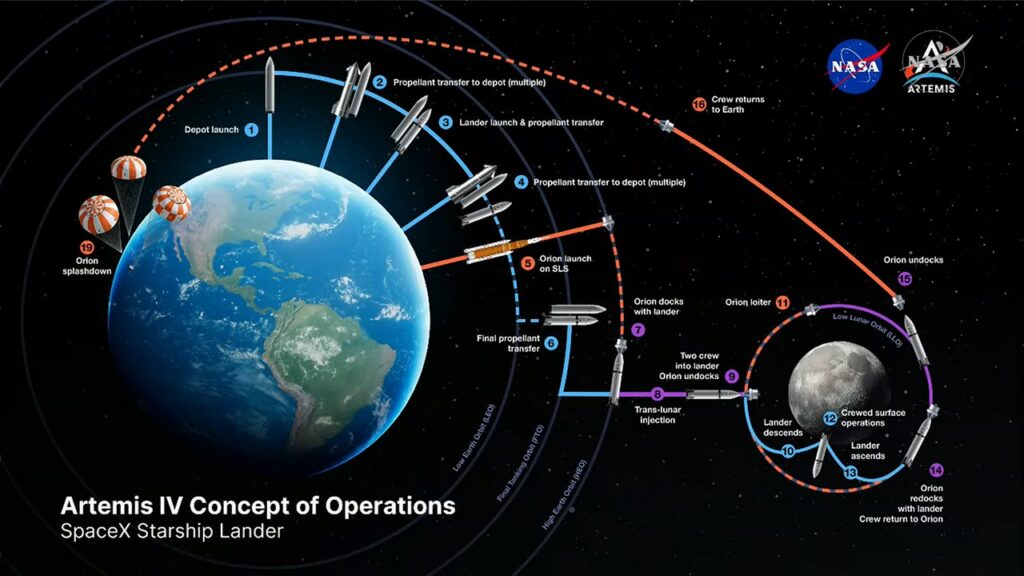
For SpaceX, the Starship docking location has been shifted from a near-rectilinear halo orbit near the Moon to a high Earth orbit. Despite this change, SpaceX must still perform multiple refueling flights to supply the lander with sufficient propellant before it proceeds to the lunar surface.
Blue Origin will utilize a different architecture for its Blue Moon lander, involving four launches of the New Glenn rocket. This approach eliminates the requirement for in-space propellant transfer between vehicles, allowing the lander to dock with the Orion spacecraft in a low lunar orbit.
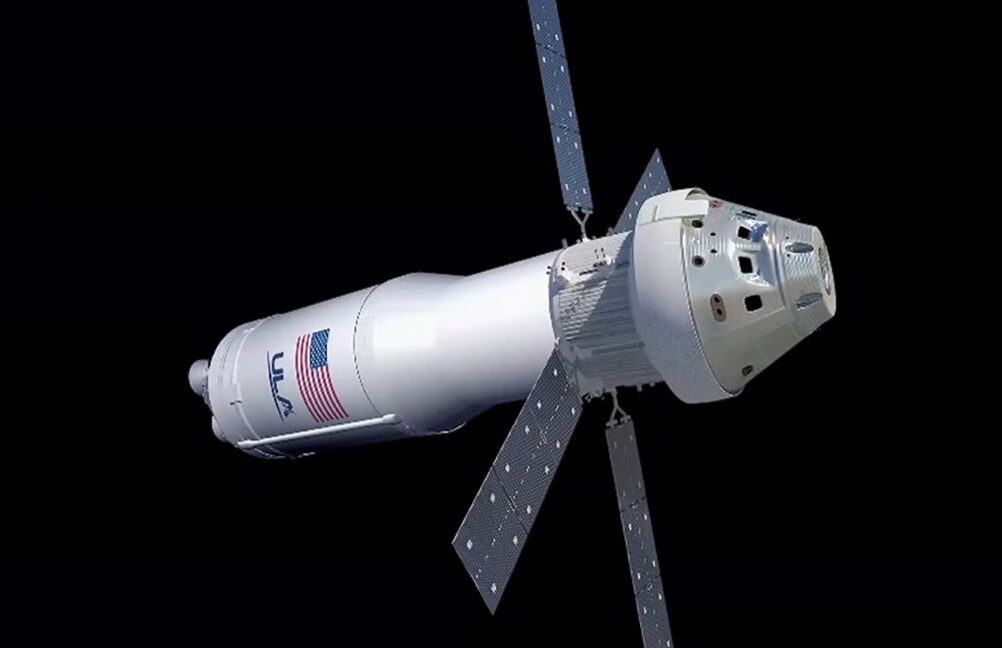
NASA is collaborating with the United Launch Alliance to develop an extended Centaur V upper stage for the Space Launch System rocket. This upgrade is intended to enable the Orion spacecraft to reach a low lunar orbit, potentially reducing fuel requirements for Blue Moon and improving emergency abort options.