

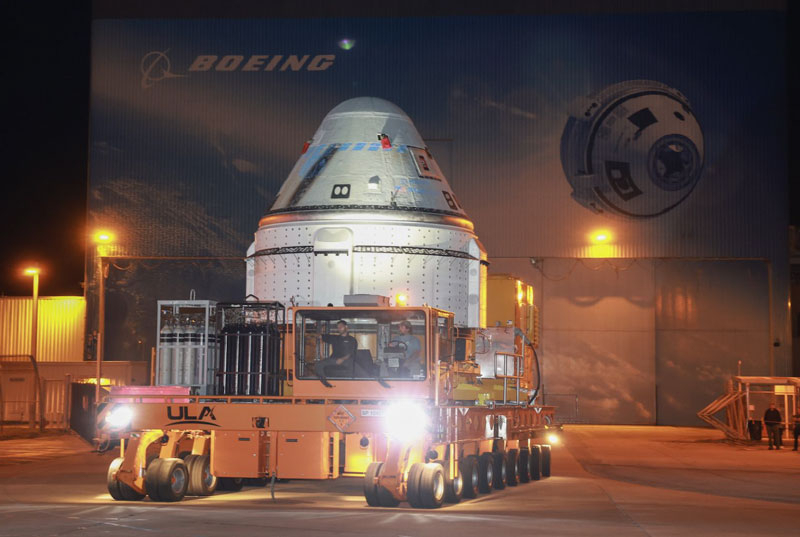
NASA plans to return the Boeing Starliner to active service for crewed missions to low Earth orbit. The agency intends to order two additional crewed flights from Boeing and provide financial support to address propulsion system issues and certify a new launch vehicle for the spacecraft.
The Starliner program faced significant setbacks during a 2024 crewed test flight, when propulsion system malfunctions led NASA to classify the incident as a Type A hazard. Consequently, astronauts Butch Wilmore and Sunita Williams returned to Earth aboard a SpaceX Crew Dragon capsule instead of the Starliner.
Boeing must transition the Starliner to a new launch vehicle because the Atlas V rocket, for which the ship was originally designed, has a limited supply of engines. Potential future launch platforms include the Vulcan rocket from ULA or the New Glenn rocket from Blue Origin.
NASA's decision is driven by the need to ensure crew transportation capabilities beyond 2028, as SpaceX plans to phase out the Falcon 9 and Crew Dragon in favor of the Starship system. This transition creates uncertainty for commercial partners planning private space stations after the ISS retires.
SpaceX president Gwynne Shotwell recently commented on the situation, noting that while the company will not stop Crew Dragon flights immediately, she emphasized that Boeing should fulfill its contractual obligations given the significant government funding the company has already received.


