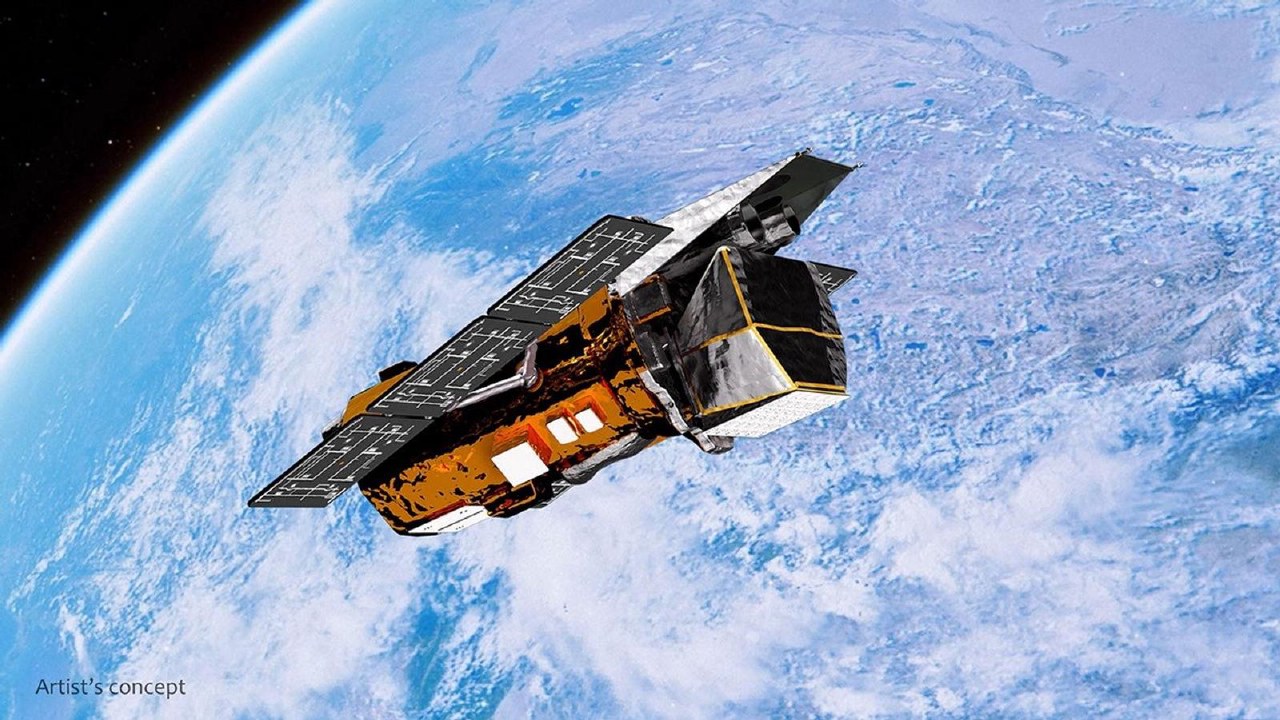
NASA has officially concluded the mission of the Swift space observatory after nearly 22 years of operation. The telescope conducted its final observation on October 20. Currently, the spacecraft is orbiting at an altitude of less than 275 km, where atmospheric drag prevents stable pointing. It is expected to re-enter the atmosphere and burn up within the next few weeks.
Launched on November 20, 2004, Swift exceeded its original two-year mission lifespan by more than tenfold. During its tenure, the observatory recorded over 2,000 gamma-ray bursts and studied more than 1,400 supernovae. Its data has contributed to nearly 7,000 scientific publications, covering observations of black holes, active galaxies, asteroids, and comets.
Swift was designed to detect and localize transient gamma-ray bursts within one minute, allowing for rapid follow-up observations. In May 2005, it successfully captured the afterglow of a 0.03-second burst, GRB 050509B, confirming theories that such events result from neutron star mergers. The observatory utilized X-ray, optical, and ultraviolet instruments to analyze these phenomena.
The mission demonstrated high operational efficiency, capable of scheduling observations for up to 75 independent targets daily. This flexibility allowed researchers to study diverse, rapidly changing cosmic events without requiring dedicated missions for each. The system's ability to switch between tasks proved vital for multi-wavelength astronomy.
The legacy of the mission includes an extensive archive of approximately 12 TB of data. This repository features nearly 22 years of brightness measurements, various spectra, and over 1.5 million images captured by the optical and ultraviolet telescopes. The archive remains open to the scientific community for ongoing analysis and future research.