

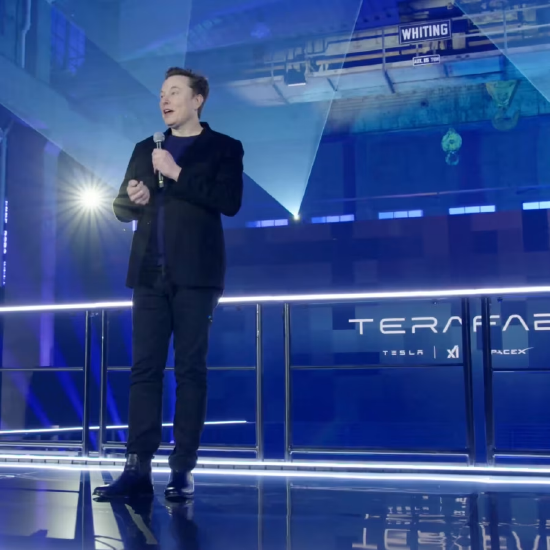
Elon Musk recently stated that China possesses unparalleled capabilities in scaling production once a manufacturing process is mastered, citing lithium batteries and solar panels as examples. He noted that SpaceX remains a rare exception in maintaining a competitive edge in large-scale production, primarily through reusable rocket technology and high-frequency launch operations.
Regarding the semiconductor sector, Musk highlighted that while China is expanding its traditional DRAM production, advanced memory technologies present significant hurdles. He specifically pointed to High Bandwidth Memory (HBM) as a complex challenge that requires sophisticated design, vertical stacking, advanced packaging, and thermal management, which are critical for AI infrastructure.
Data from TrendForce indicates that Chinese manufacturer CXMT increased its global DRAM market share to 9.5 percent in the second quarter of 2026, up from 7.6 percent in the first quarter. However, it still trails behind major players like Samsung at 39.4 percent, SK Hynix at 24.9 percent, and Micron at 23.3 percent.
Musk also referenced the Terafab project, an initiative by Tesla and SpaceX to establish large-scale semiconductor manufacturing facilities in the United States. The project aims to integrate logic and memory chip production with advanced packaging to secure supply chains for autonomous driving, robotics, and AI data centers.


