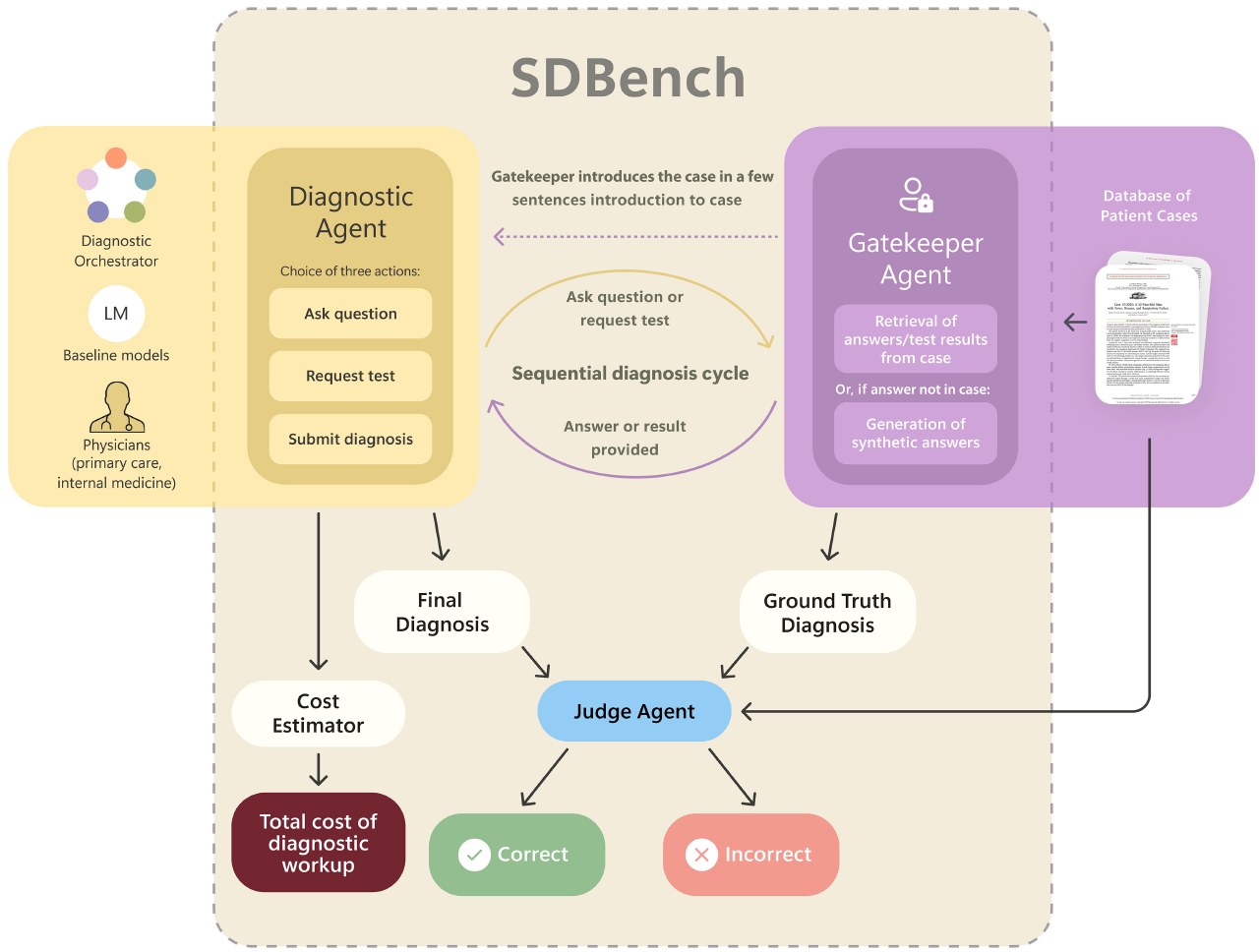
Microsoft has developed an AI diagnostic system called MAI-DxO, which coordinates multiple AI agents to simulate a medical panel. In a study published in Science, the system correctly diagnosed complex medical cases 83% of the time, compared to 36% for generalist physicians working individually.
The MAI-DxO system integrates models from various providers, including OpenAI, Google, Anthropic, Meta, and DeepSeek. Testing showed that the system achieved its best results when paired with OpenAI’s GPT-5 and GPT-5.5 models, particularly in complex diagnostic scenarios.
Microsoft is currently collaborating with the Mayo Clinic to develop a foundation model for healthcare, with a release scheduled for next year. Additionally, the company has launched a partnership with Beth Israel Deaconess Medical Center in Boston to evaluate the clinical reasoning of DxO in real-world hospital settings.
Mustafa Suleyman, CEO of Microsoft AI, stated that the company aims to achieve a breakthrough in medical records by 2027. The initiative is part of a broader strategy to develop medical superintelligence, which the company defines as the ability to surpass human-led systems in medical reasoning and care coordination.