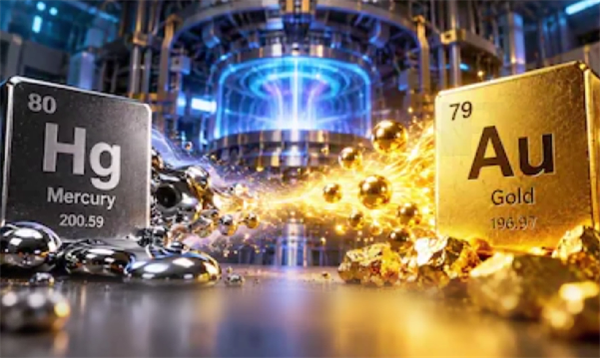
Marathon Fusion, a startup based in San Francisco, reported that it successfully converted mercury into gold in September using fusion-derived neutrons. The company claims its production rate is ten times higher than the record set by CERN in 2025.
The process involves a deuterium-tritium reaction that generates high-energy neutrons. These neutrons strike mercury-198, converting it into radioactive mercury-197, which then decays into stable gold-197 over several days. The company provided gamma-ray spectrum data as evidence, though it did not disclose the specific mass of gold produced.
For context, CERN generated approximately 29 picograms of gold over a four-year period. Marathon Fusion aims to scale this technology, suggesting that a large-scale fusion power plant could potentially produce tons of gold annually, which could double its revenue. However, the process requires enriched mercury and industrial-grade fusion facilities that are currently unavailable.
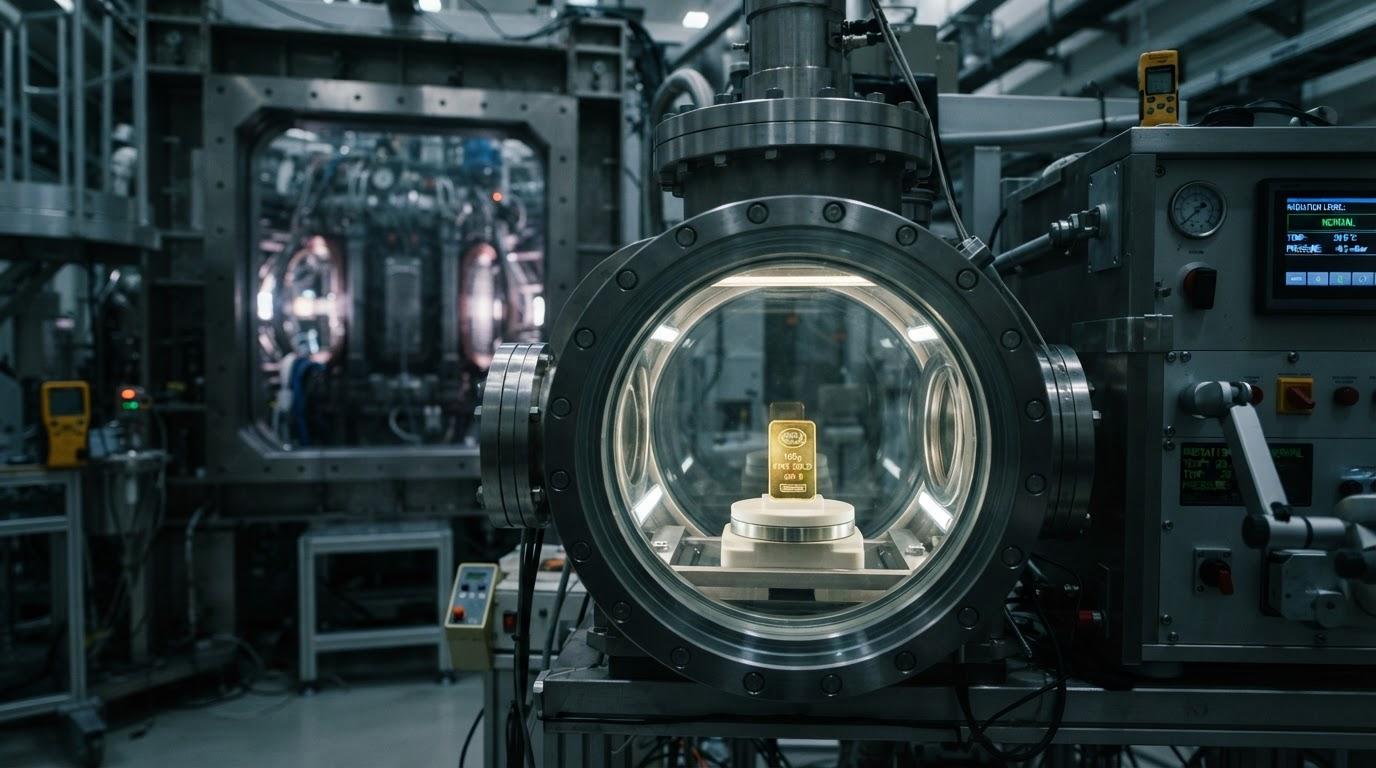
The produced gold requires a cooling period to reach safe radioactivity levels. Marathon Fusion estimates that this storage phase could last between 14 and 18 years. The company characterizes the transmutation process as a complex but technically feasible engineering challenge.