

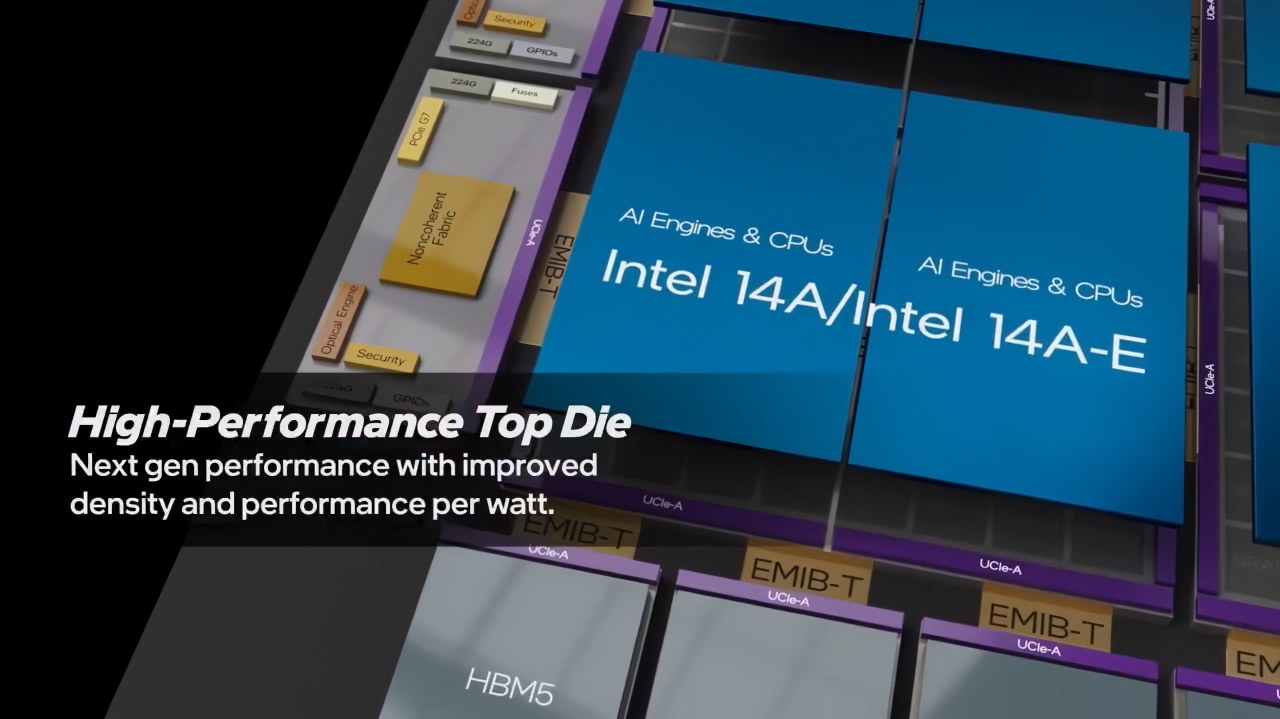
Investment bank Piper Sandler reports that Intel Foundry is currently having its 1.4nm-class 14A process node evaluated by several major technology firms. The list of companies assessing the technology includes Amazon, Apple, AMD, Google, Tesla, Microsoft, Nvidia, and Qualcomm.
The 14A process is a key component of Intel's IDM 2.0 strategy. It incorporates second-generation RibbonFET gate-all-around transistors, PowerDirect architecture, and utilizes High-NA EUV lithography. Compared to the 18A node, Intel claims the 14A process offers 15% to 20% better performance per watt, a 30% increase in logic density, and a 25% to 35% reduction in power consumption.
Major tech companies are seeking alternative foundry sources to reduce reliance on a single supplier and mitigate geopolitical risks. Intel has provided these potential clients with process design kits and committed to using the 14A node for its own internal product manufacturing to demonstrate confidence in yield and delivery capabilities.
Nvidia and AMD are evaluating the 14A process for future server CPUs and AI accelerators. Cloud providers like Amazon, Google, and Microsoft are considering the platform for their custom AI chips. Meanwhile, Tesla and Qualcomm are monitoring the node's power efficiency for potential use in autonomous driving and mobile platforms.
Industry analysts note that while the transition from evaluation to signed manufacturing agreements involves a lengthy validation process, the simultaneous interest from major buyers marks a significant shift. As Intel progresses with trial production, the market is moving toward a more competitive landscape in advanced semiconductor manufacturing.



