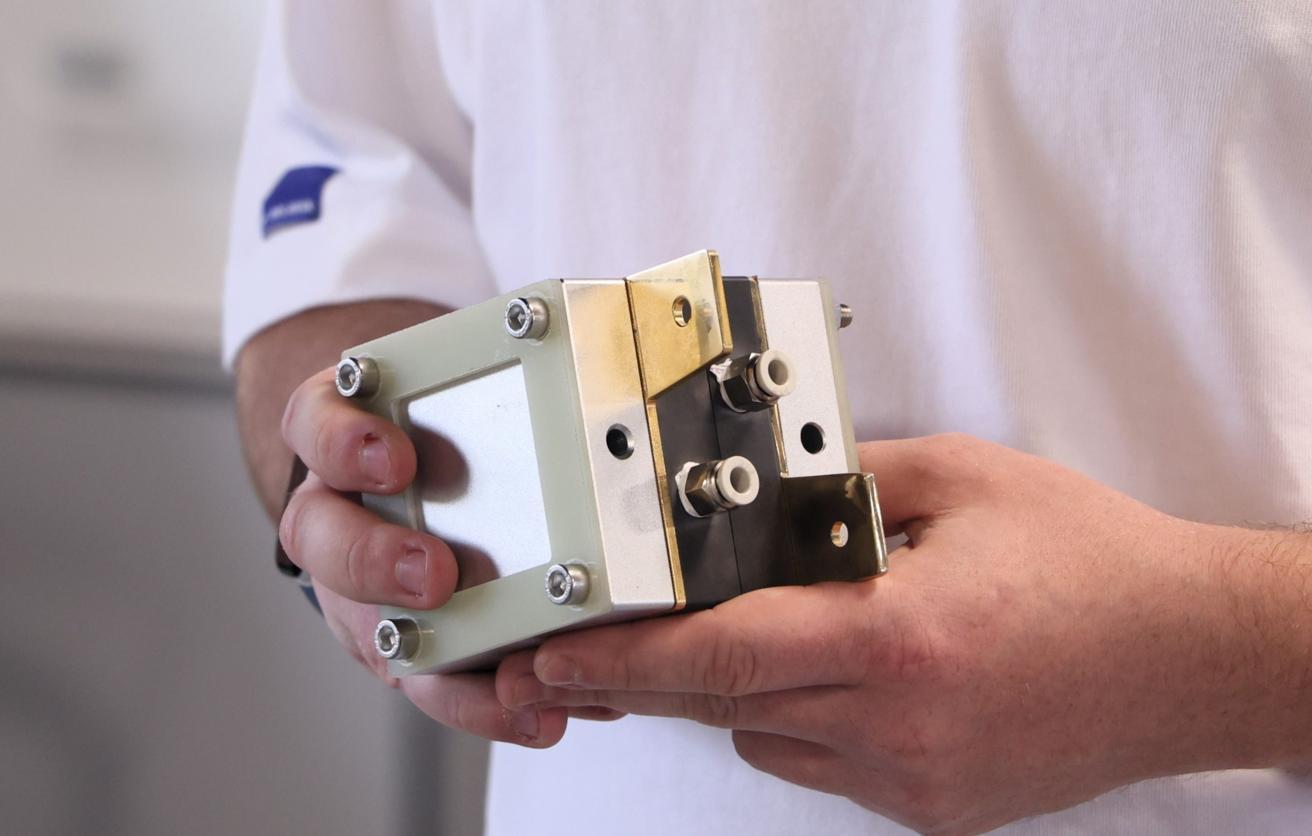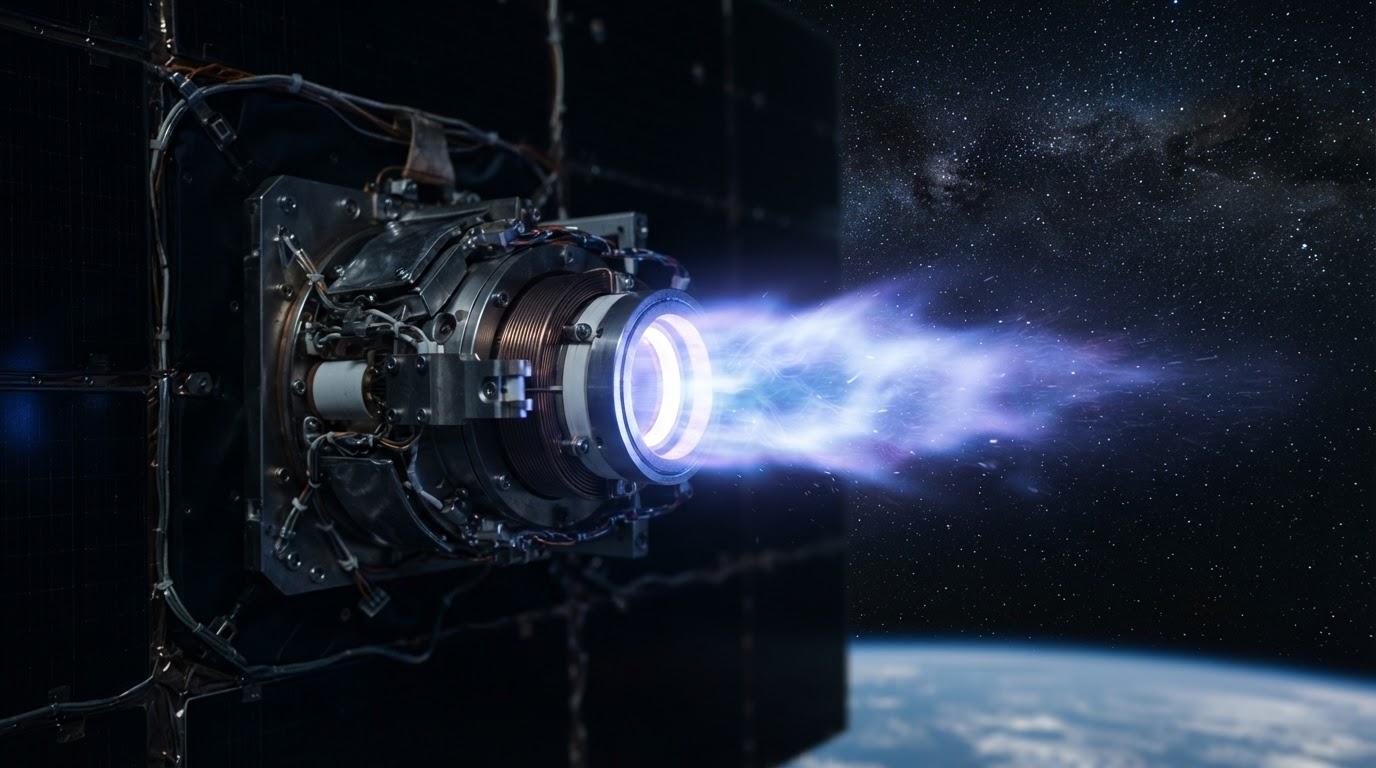
Engineers at the MAI Research Institute of Applied Mechanics and Electrodynamics have developed a plasma engine for satellites with a power output of 900 watts. The design features an acceleration zone located outside the discharge channel, which prevents high-speed particles from damaging the ceramic insulation. This configuration significantly reduces wear and maintains stable thrust and specific impulse.
The engine has successfully completed nearly 2,000 hours of continuous testing. According to the developers, the unit is capable of over 10,000 start-stop cycles. It is designed for spacecraft weighing from several hundred kilograms to over a ton, with an expected operational lifespan of five to seven years. The technology enables orbit correction, collision avoidance, and end-of-life deorbiting.
Compared to chemical engines, this plasma system consumes five to seven times less fuel, with particles accelerated to approximately 20 kilometers per second. While plasma engines provide higher thrust in a more compact form factor than ion systems, they require longer maneuver times. The engine is ready for mass production, and the adaptation process for specific spacecraft is estimated to take six months.