

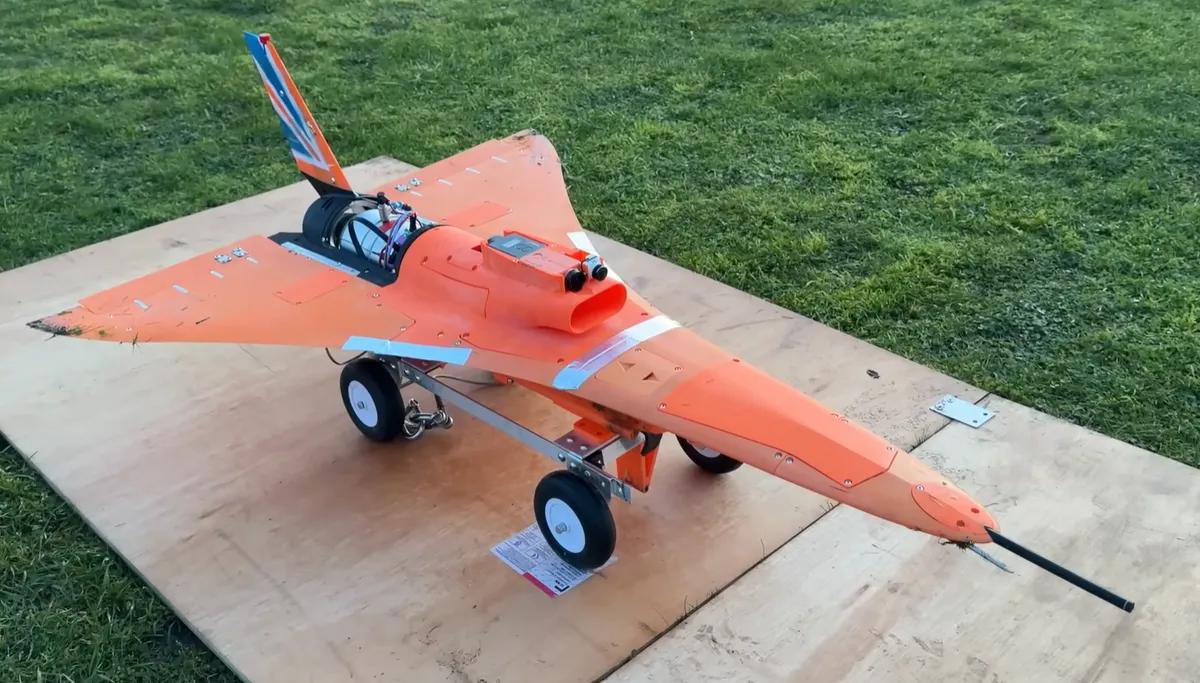
The Mach Initiative team, founded by University of Bath graduates, developed the Kingchaser radio-controlled jet. The aircraft is primarily constructed using 3D-printed parts, carbon fiber reinforcements, and metal components, with a total weight of approximately 9 kg.
The project evolved from the Kinglet drone and the Kingfisher prototype. The latter, equipped with a JetCat P60 engine producing 63 N of thrust, reached speeds of 330 km/h. The new Kingchaser model is 20% larger than its predecessor and is designed to accommodate a more powerful engine with 150 N of thrust.
To withstand high speeds and thermal stress, engineers replaced the PET-CF material with heat-resistant PPS-CF for the engine housing. The structure is reinforced with carbon fiber rods, while titanium plates and aluminum tape protect plastic elements from exhaust heat. Steel and aluminum components are used for engine mounting.
The aircraft features onboard electronics for telemetry and an FPV system for real-time video transmission. The team aims to reach 988 km/h, or approximately 0.8 Mach, to surpass the world record currently held by German pilot Nils Herbrich.



