

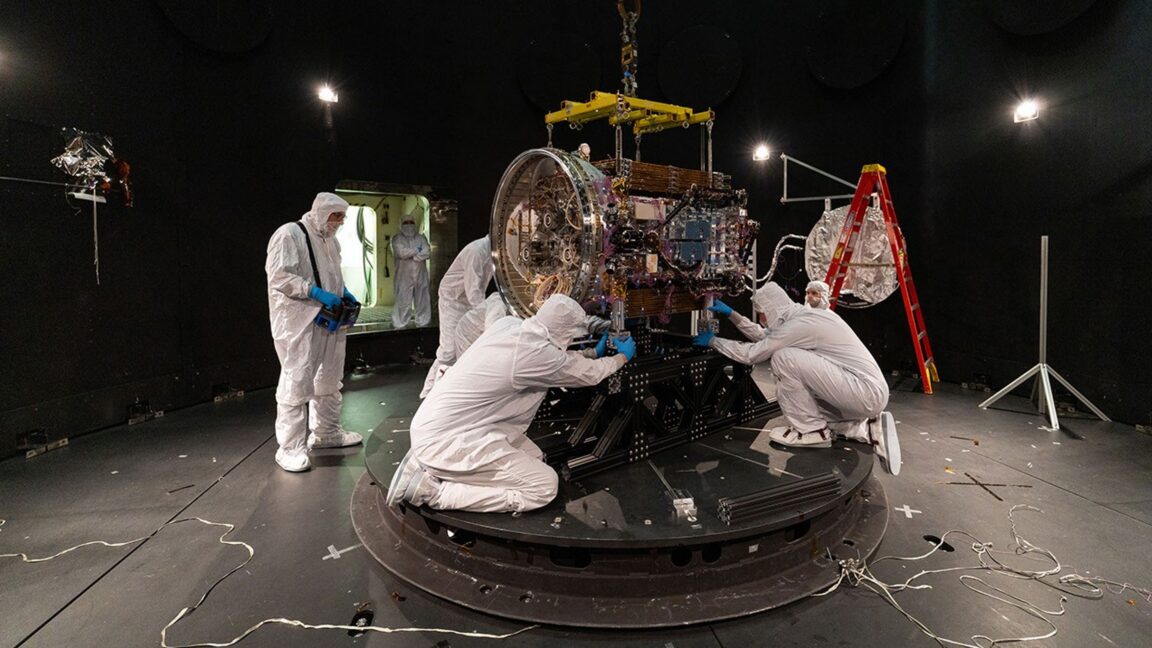
NASA awarded Katalyst Space Technologies a $30 million contract in September 2025 to develop a rescue mission for the Swift Observatory. The goal was to launch a satellite, named Link, to capture the observatory and boost it into a higher orbit within nine months. Link weighed nearly half a ton and featured robotic arms, electric thrusters, and solar arrays.
The Link spacecraft launched on July 3, but suffered malfunctions weeks later. A failure in the control electronics for the reaction wheels caused overheating, and a subsequent issue with an unresponsive RCS valve left the satellite spinning out of control. NASA officially aborted the mission in August after determining that Link could not reach the Swift Observatory.
Despite the failure, the mission demonstrated that rapid satellite servicing is possible on a limited budget. Katalyst completed the design by the end of 2025 and reached within 10 kilometers of Swift. The project was completed within 5 percent of the original cost estimate, totaling approximately $30 million, which included launch, labor, and contractor expenses.
NASA officials noted that the mission provided valuable lessons for future rapid-response efforts. The agency previously canceled the OSAM-1 project, which had cost $1.5 billion, citing advancements in the commercial sector. NASA is now evaluating other aging astrophysics platforms, such as the Hubble Space Telescope and the Chandra X-ray Observatory, for potential future servicing.
To provide more time for the rescue, the Swift operations team at Penn State University reoriented the observatory to reduce aerodynamic drag, extending its orbital life by several months. NASA plans to move toward a service model for future missions, emphasizing the need to initiate such projects well in advance to avoid the constraints of tight timelines and limited testing.


