Researchers at the Korea Institute of Energy Research (KIER) have developed a new electrode for hydrogen production that replaces platinum with nickel and cobalt. According to the team, the cost of these materials is approximately $0.02 and $0.05 per gram, which is about 99% lower than the cost of platinum and ruthenium.
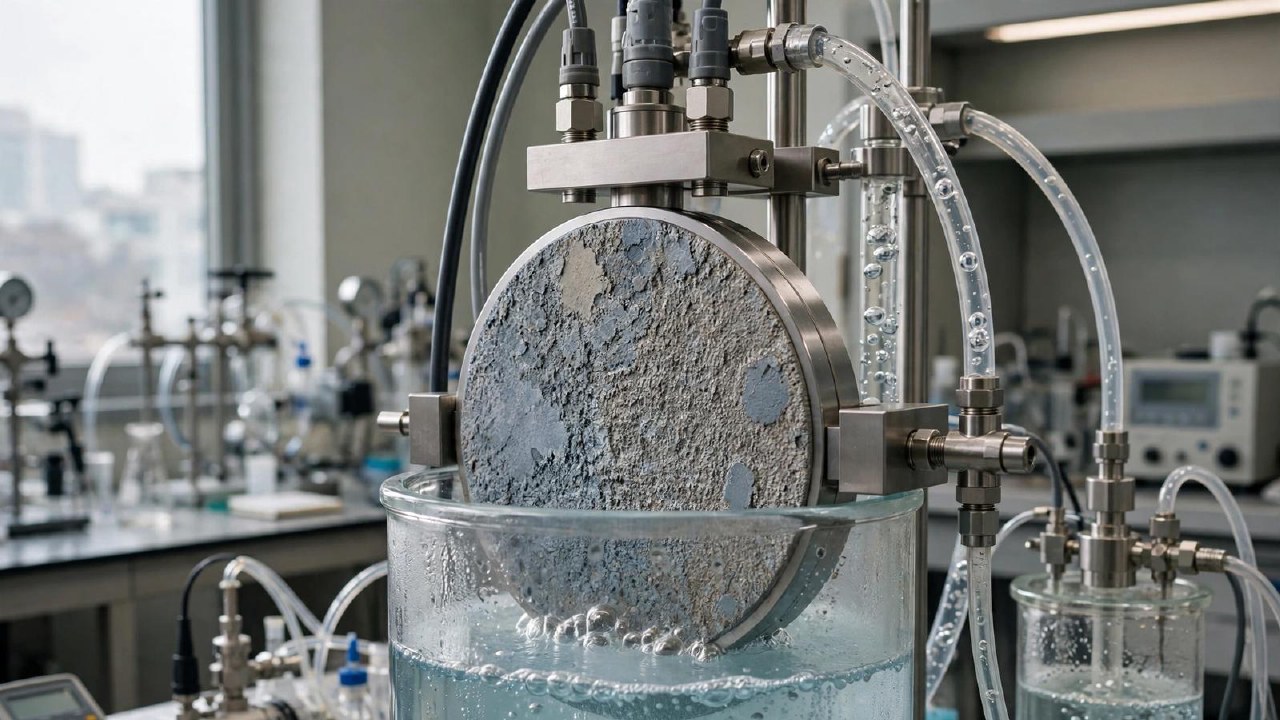
The new electrode achieves performance comparable to commercial platinum systems, showing an overpotential of 22.7 mV compared to 56.5 mV for platinum counterparts. The design utilizes a dual-component structure of nickel oxide and a nickel-cobalt alloy, where nickel oxide accelerates water molecule splitting and the alloy facilitates hydrogen formation.
During tests with an 8.7 cm electrolysis cell, the electrode reduced cell voltage by 11% compared to standard nickel electrodes. The material maintained its performance through 600 cycles of starting and stopping, which is critical for systems powered by intermittent renewable energy sources like wind and solar.
The team has already begun scaling the technology, with current prototypes reaching 40 cm in diameter. Researcher Hyun-Joon Lee stated that the next objective is to expand the electrode surface area to 5000 square centimeters for integration into megawatt-class industrial systems.