Intel is developing support for XMX-accelerated XeSS within Valve's Proton compatibility layer. This integration aims to replace the current, less efficient upscaling method used in the layer, which is expected to improve performance for Linux users with Intel graphics hardware.
The company is actively promoting XeSS 3.0, which includes multi-frame generation technology. This feature inserts up to three generated frames between two rendered ones, potentially increasing frame rates by up to four times, mirroring capabilities found in competing AI-driven frame insertion solutions.
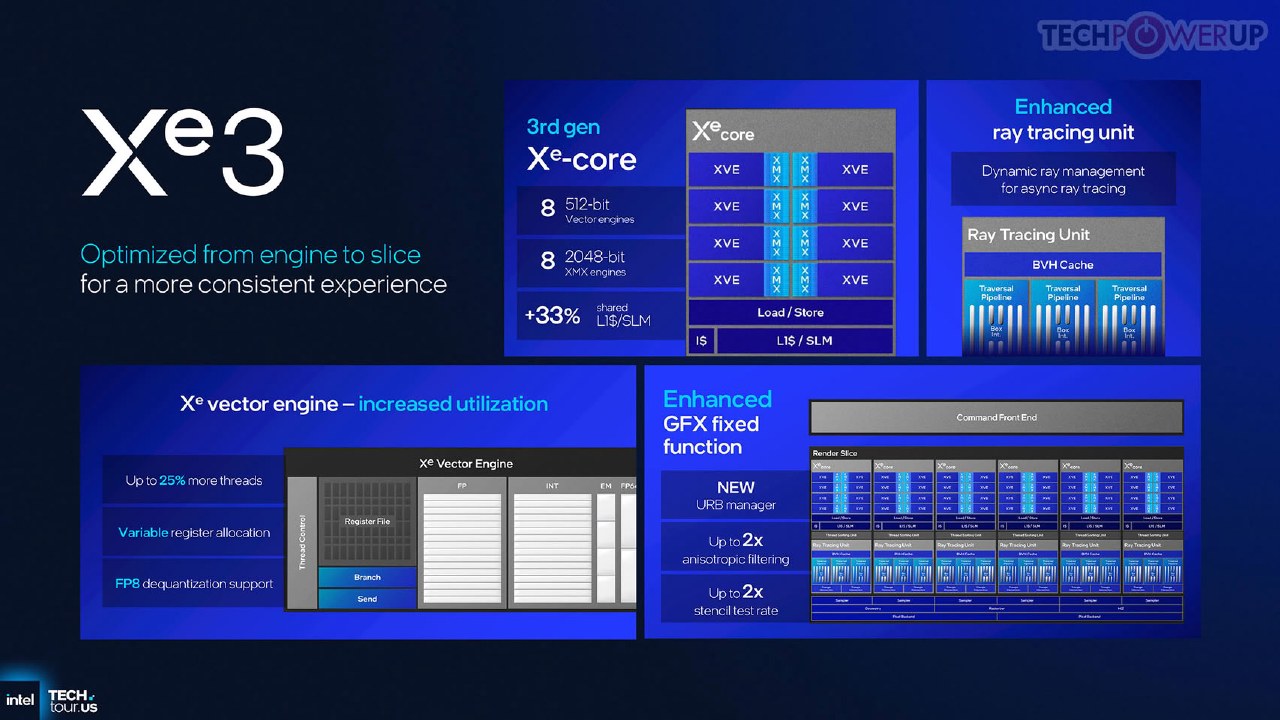
Technical specifications for the upcoming Panther Lake SoC reveal an architecture featuring Xe3 cores. Each core contains eight vector engines, eight matrix engines, and a ray tracing unit. These components utilize refined thread dispatch and load balancing to improve execution unit efficiency.
The new architecture doubles peak FP16 and INT8 throughput compared to the previous Xe2 generation. These enhancements support both standard rendering tasks and AI-assisted processes, including denoising, upscaling, and frame generation, providing a foundation for the new Proton support.