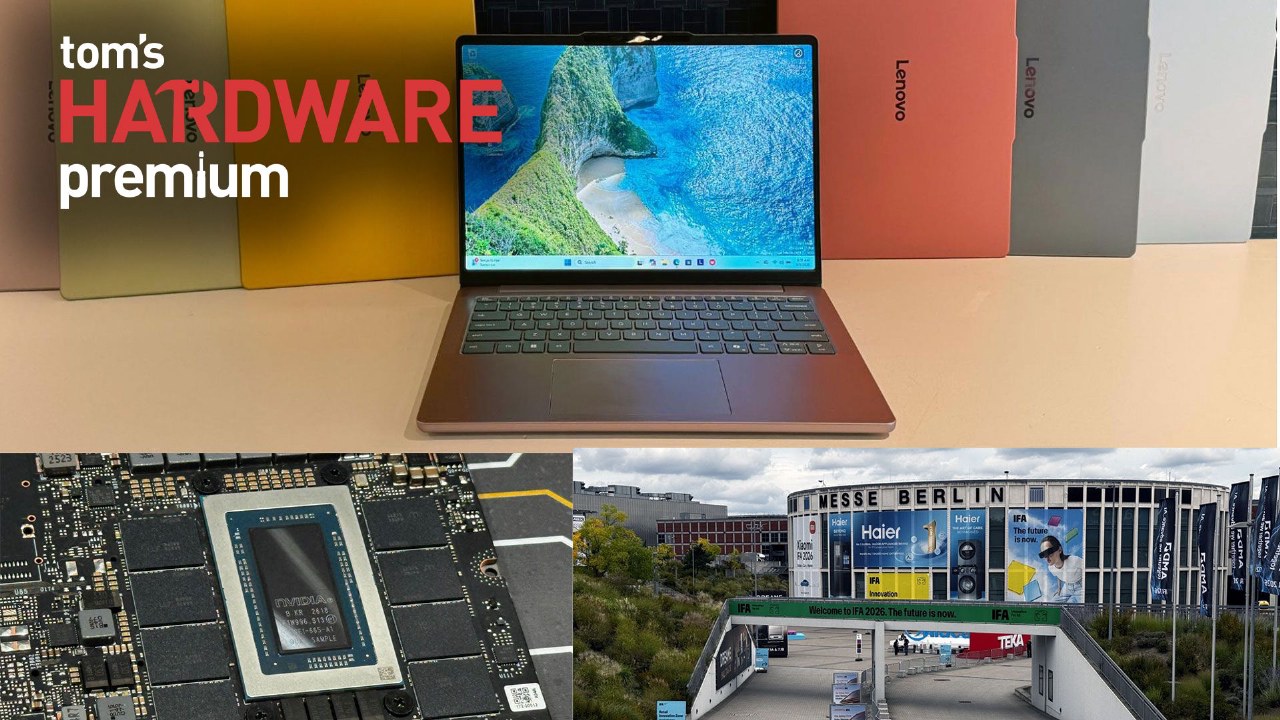
At the IFA 2026 exhibition, the laptop market demonstrated a clear polarization between budget-friendly devices and high-end AI-focused workstations. Manufacturers are increasingly targeting the premium segment with colorful designs and the entry-level market with affordable hardware, leaving a gap in the mid-range performance category.
Lenovo introduced the IdeaPad Vibe series featuring Qualcomm Snapdragon X and AMD Ryzen AI 400 chips, while Dell launched the 14S model with expanded port options. Acer also showcased a 16-inch version of its Swift Air. These devices emphasize aesthetics, offering multiple color options to compete with Apple's MacBook Neo.
High-end computing is dominated by systems designed for agentic AI. AMD-based workstations, such as the Lenovo ThinkCentre X and models from Minisforum and GMKtec, feature the Ryzen AI Max+ Pro 495 chip with up to 192GB of unified memory. Prices for these configurations can reach $7,000.
Nvidia is preparing to launch its RTX Spark N1X platform in October, with new devices from Acer and Lenovo already on display. These systems are positioned for workstation tasks, gaming, and local AI agent processing. Vendors are moving away from NPU-focused marketing toward systems with higher memory and compute capacity.
The current market landscape offers either basic machines priced under $800 or expensive high-performance systems. Mid-range users seeking premium build quality and performance in the $800 to $1,500 range currently have limited options, with industry expectations shifting toward future releases like Intel Nova Lake or AMD Medusa Point.