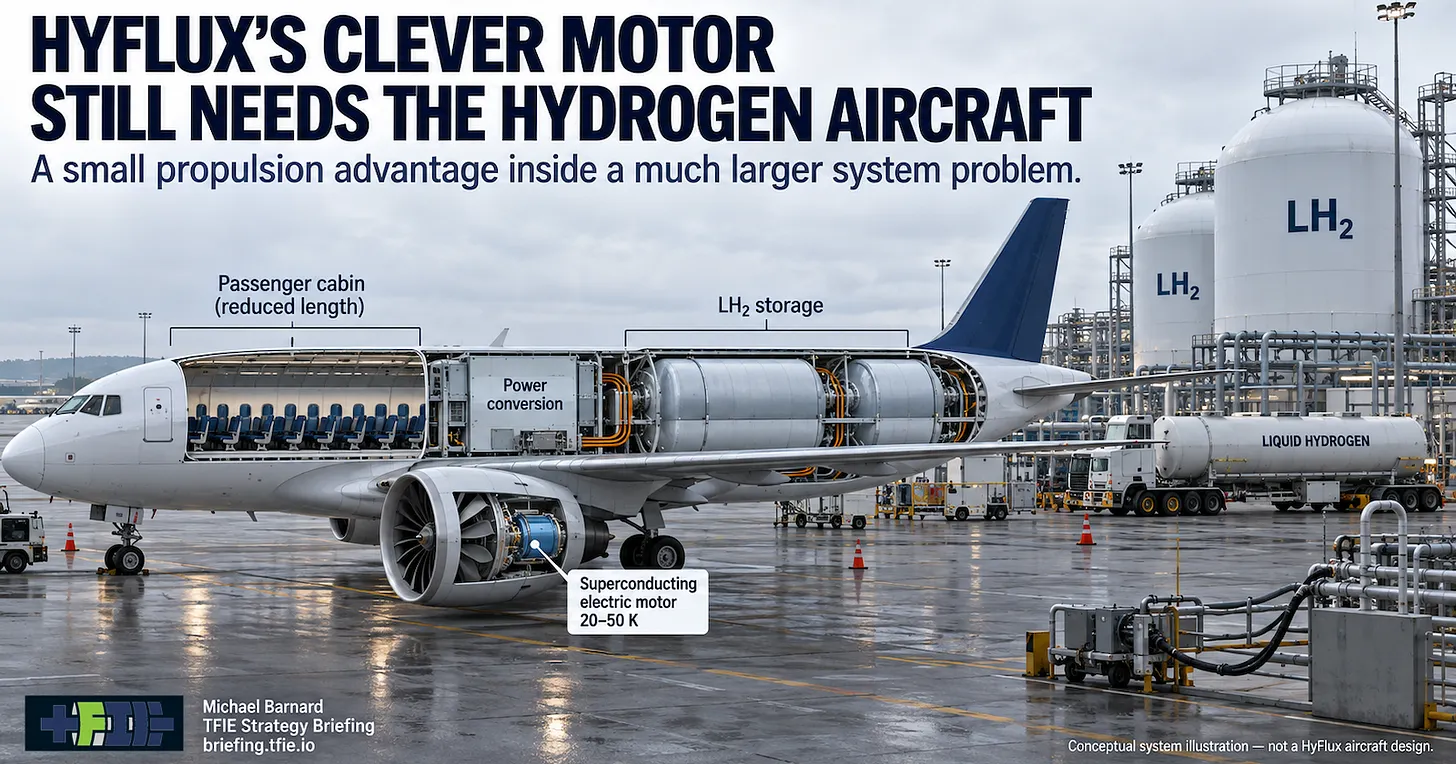
UK-based HyFlux is developing a fully superconducting electric motor for aviation that utilizes the cryogenic properties of liquid hydrogen as a cooling system. The company aims to achieve a specific power exceeding 20 kW/kg, which is intended for multi-megawatt propulsion systems in future hydrogen-powered aircraft.
The technology faces significant engineering challenges, particularly regarding the total mass of the propulsion system once all necessary flight-ready hardware is integrated. While the motor design is theoretically promising, it remains unclear how the cryogenic environment will impact the overall reliability and maintenance of an airline-scale propulsion architecture.
HyFlux’s business model relies on the successful development and mass deployment of liquid-hydrogen commercial aircraft. This requires not only the creation of new airframes and certification pathways but also the establishment of large-scale cryogenic fuel infrastructure at airports, which currently does not exist.
The competitive landscape for aviation energy is evolving, with battery-electric, hybrid, and sustainable liquid fuel technologies advancing simultaneously. HyFlux must demonstrate that its propulsion system maintains a mass advantage at the full-system level to remain a viable alternative to these existing and emerging solutions.
The success of the motor technology does not guarantee the viability of the broader hydrogen aviation market. Even if HyFlux matures its product through multi-megawatt demonstrations, the company remains dependent on external factors, including airline demand, regulatory approval, and the economic feasibility of hydrogen infrastructure.