

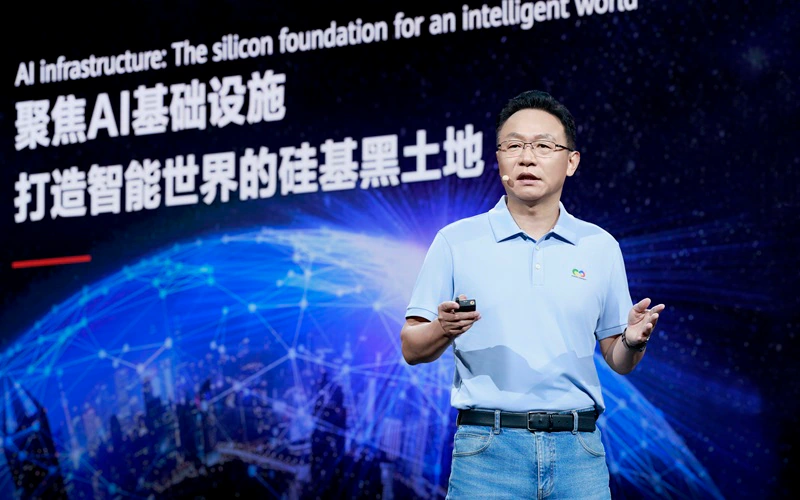
Huawei has unveiled its roadmap for next-generation AI processors, aiming to compete with Nvidia in computing infrastructure. Rotating Chairman Wang Tao announced that the company plans to launch two new AI chips in 2027. The 960DT model is scheduled for release in the first quarter, while the Ascend 960PR is expected in the third quarter.
To overcome limitations in advanced manufacturing processes, Huawei is focusing on system-level interconnects. The company developed the UnifiedBus protocol to aggregate large numbers of chips into massive computing systems. This technology serves as the foundation for Huawei's new AI architecture, allowing thousands of chips to function as a single unit.
Huawei has developed 11 specialized semiconductor components based on the UnifiedBus technology. The company's 'superclusters' are designed to support the interconnection of up to 1 million AI processors. Additionally, Huawei has delivered over 1,000 'supernodes' to more than 370 customers for large-scale model training and inference tasks.
The company is also working to expand its software ecosystem to challenge Nvidia's CUDA. Currently, Huawei's AI chip platform has 5,270 monthly active developers. Huawei aims to bridge the performance gap with global leaders by accelerating hardware iterations and focusing on cluster architecture innovation as more domestic institutions migrate to its platform.


