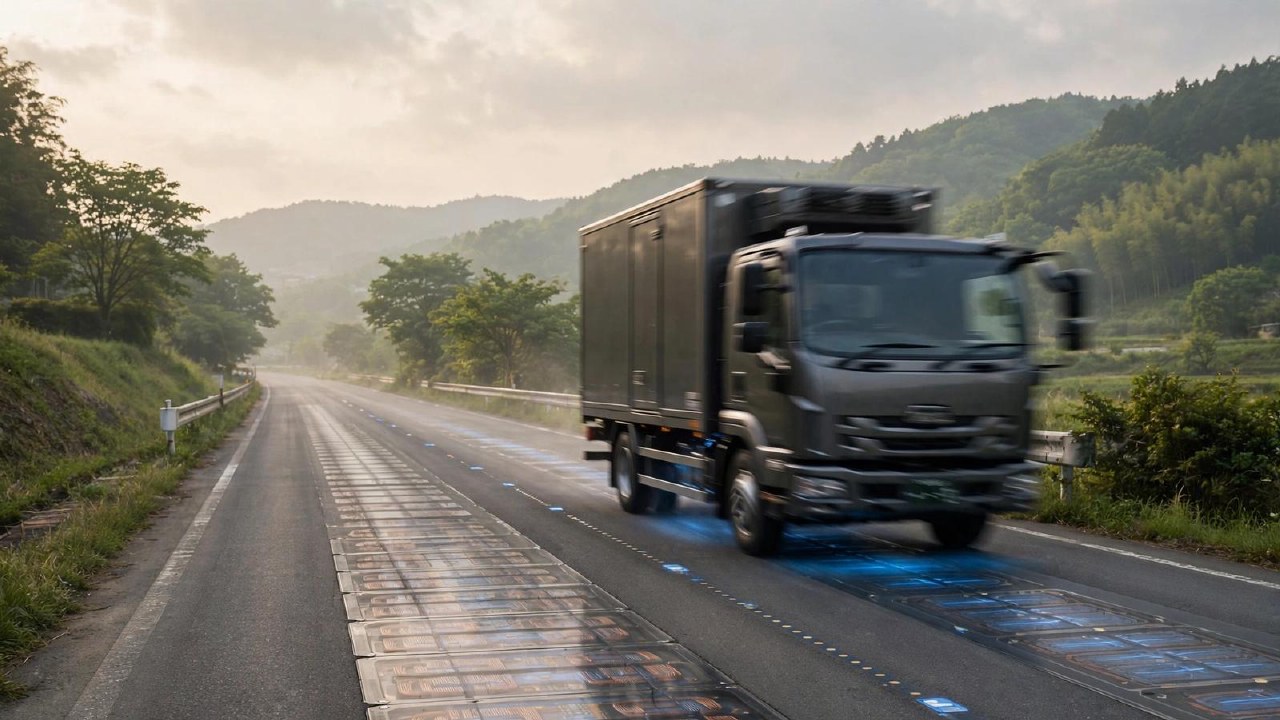
In 2027, Honda will launch a pilot program featuring a 300-meter stretch of road with integrated wireless charging. Located in Chiba Prefecture, Japan, the project is a collaboration between Honda’s research division and the construction firm Taisei. The system is designed to deliver up to 150 kW of power to electric vehicles traveling at speeds of up to 120 km/h, with initial testing focused on commercial transport.
Honda’s R&D chief engineer, Taku Ueda, stated that the technology aims to reduce battery size in future vehicles. Smaller batteries could lower vehicle weight and production costs, while also mitigating the rapid wear of road surfaces caused by heavy electric cars. By enabling charging while in motion, the company hopes to alleviate range anxiety for drivers and reduce the reliance on large, heavy battery packs.
The initiative follows similar developments in Europe. Since 2022, Electreon and EnBW have operated a one-kilometer electrified road section for public buses in Balingen, Germany. Meanwhile, in France, a consortium including Vinci Autoroutes and the Gustave Eiffel University is testing a segment on the A10 motorway that supports power transfers exceeding 200 kW for various vehicle types.
France has set ambitious infrastructure goals, aiming to deploy 5,000 kilometers of electrified roads by 2030 and 9,000 kilometers by 2035. For Honda, the primary focus remains the logistics sector. As electric fleets grow, many depots face significant grid capacity constraints and long wait times for power upgrades, making road-based charging a potential solution to shift energy demand from depots to public highways.