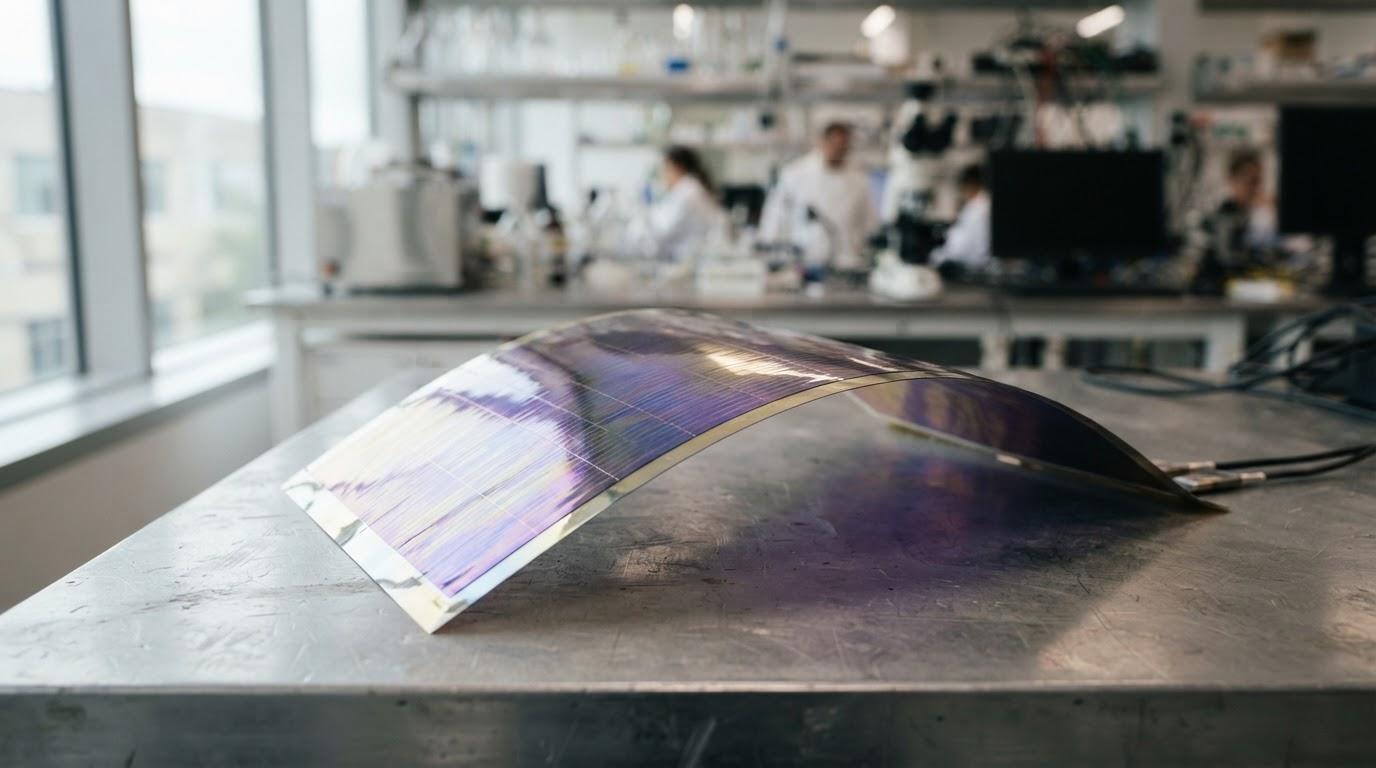
Researchers at the Hong Kong University of Science and Technology (HKUST) have developed a method called trans-interface engineering (TIE) to improve the durability of perovskite solar cells. This approach addresses the degradation of thin layers at material interfaces, which typically limits the lifespan of these devices.
The team created vertical nanostructural connections by integrating polymerizable molecules into the perovskite and electron-transport layers. A heat-induced chemical reaction forms a network of covalent bonds, effectively stitching the layers together. This process increases the strength of the interface nearly threefold.
In laboratory tests, the solar cells achieved an efficiency of 27.04%. Out of 50 tested units, 92% maintained stable performance for over 1400 hours. The devices also successfully passed accelerated stress tests conducted at 85 degrees Celsius and 85% humidity.