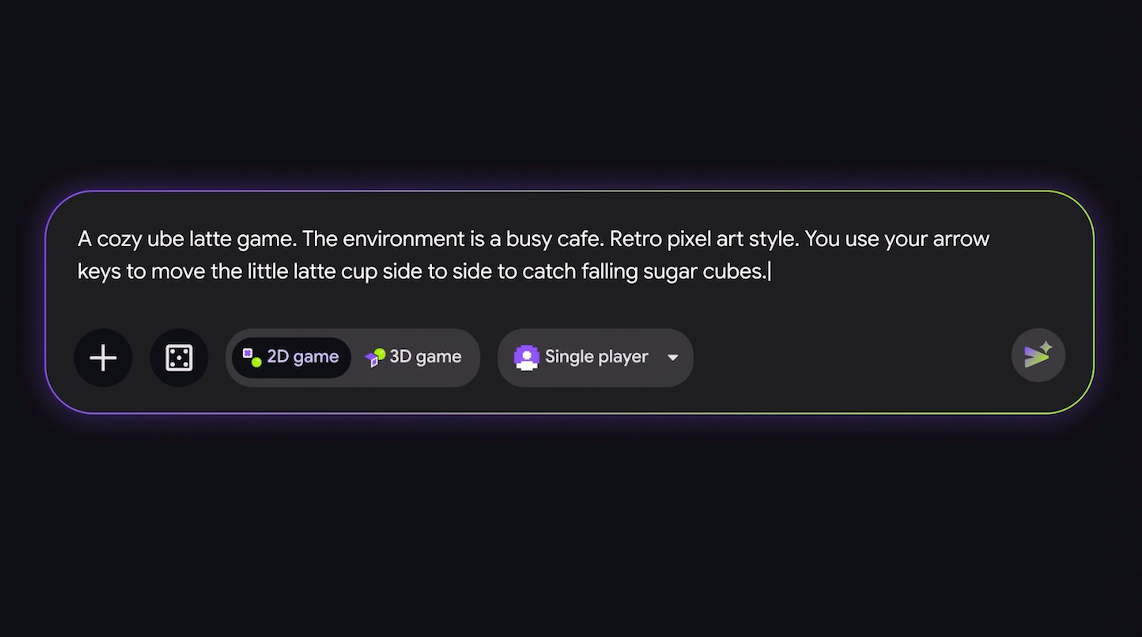
Google Labs has introduced Playground, an experimental AI platform designed to generate browser-based games from natural language descriptions. Users can specify game genres, visual styles, and mechanics without needing programming or design skills. The platform supports both 2D and 3D formats and allows users to upload custom images to be converted into game assets.
The platform functions as a community space where users can keep projects private, share them via links, or publish them to an Explore page. Published games can feature leaderboards, and creators can continue to refine their work after initial publication. This workflow aims to integrate generation, testing, and iteration into a single process.
Access to the platform is currently limited by a weekly AI generation quota. Free users receive a set amount of credits, while Google One AI subscribers are granted higher usage limits. This structure distinguishes between casual players and active creators who require more frequent AI generation capabilities.
Google plans to integrate Unity Spark technology into Playground to enhance game mechanics, improve 3D visual quality, and provide professional-grade development tools. This integration is intended to evolve the platform from a prototyping tool into a more comprehensive development environment, allowing users to transition from simple prompts to more complex projects.
The rise of AI-driven game creation platforms, including similar initiatives from companies like Roblox, signals a shift in traditional development workflows. While these tools significantly reduce the time required for creative validation, they also present challenges regarding content quality control and the potential for a surge in repetitive, low-quality game submissions.