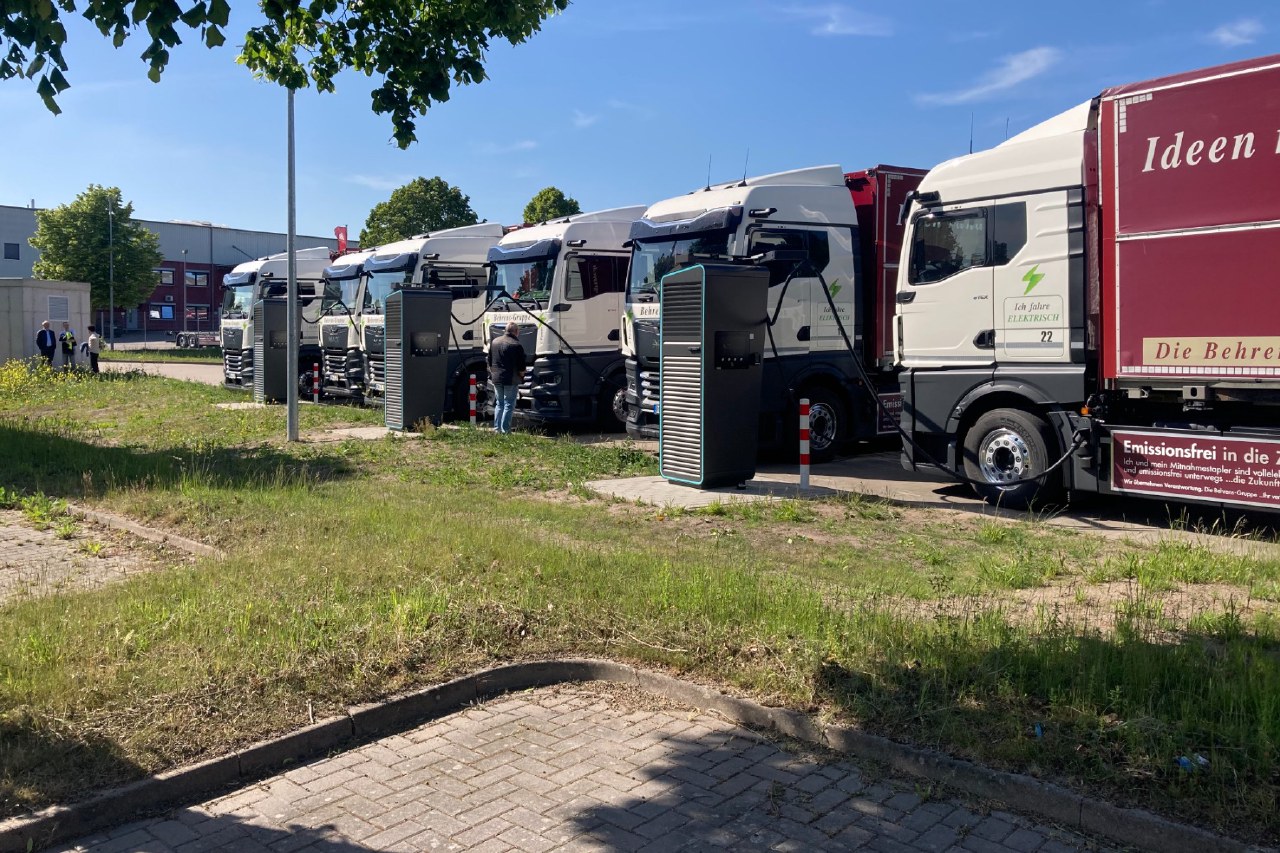
The three-year research project 'Transportation in Charge' (TiC), led by the Fraunhofer Institute for Manufacturing Technology and Advanced Materials (IFAM), has concluded. The study, funded by the German Federal Ministry for Economic Affairs and Climate Action, examined strategies for integrating electric heavy-duty trucks into logistics fleets.
Researchers found that sharing charging infrastructure among companies in industrial estates can significantly reduce operating costs. Selling electricity to third parties can further lower expenses; for a fleet of ten e-trucks, costs dropped from €352 859 to €336 903 over five years.
The study highlights that grid connection capacity remains a primary obstacle for logistics hubs. Without adequate medium-voltage connections, operators may need to rely on photovoltaic systems and battery storage. The project emphasizes that grid operators must play a central role in scaling infrastructure.
Charging requirements vary by operation: standard overnight depot charging typically needs 50 to 100 kW, while shuttle operations may require 200 to 350 kW. The project suggests that a charging price of approximately 30 cents per kWh is generally sufficient to achieve cost parity with diesel trucks.