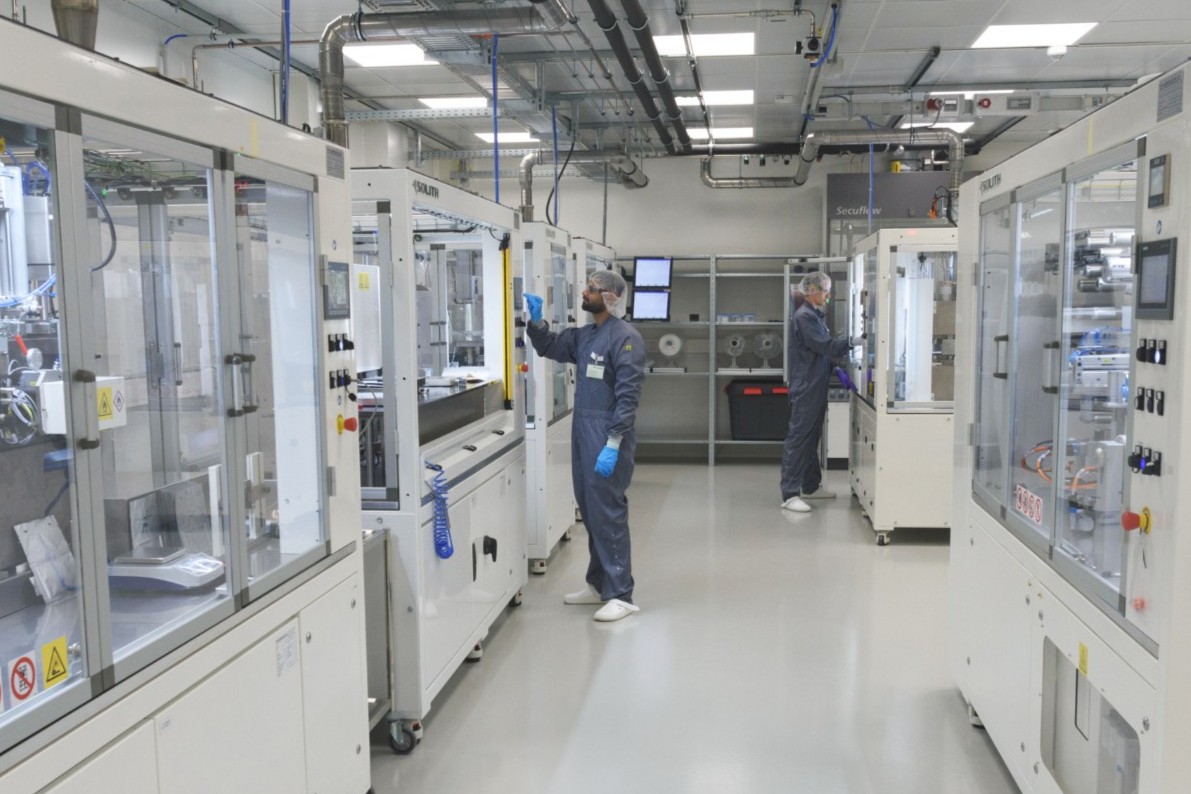
Researchers at the Fraunhofer Institute for Solar Energy Systems ISE have developed a new battery cell architecture that increases energy density by 10 to 15 percent. The design maintains the same cell weight while providing more space for active energy-storing materials.
The team achieved this by increasing the thickness of electrode coatings from the standard 100 to 200 micrometres to as much as 800 micrometres. This change reduces the number of current collectors required within the cell, as fewer alternating layers are needed.
The development occurred across three research projects funded by the German Federal Government: VORAN, which runs until June 2027, the completed INFAB project, and WinZIB2. These initiatives focused on stationary energy storage systems.
While the technology is not yet ready for series production, the institute describes the results as a promising step toward future industrialization. The architecture is intended for stationary storage systems and could potentially be applied to electric vehicle batteries.