

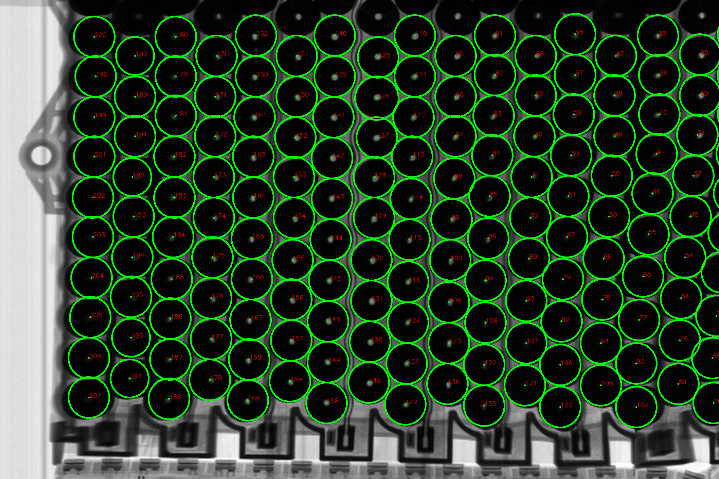
Fraunhofer IIS has introduced software that automatically analyzes 2D X-ray images of EV batteries to detect mechanical irregularities. The system identifies cylindrical, prismatic, and pouch cells, flagging issues like deformations, shifts, or cell swelling without requiring the battery housing to be opened.
The AIR (Antriebsbatterieinspektion mittels Röntgentechnik) inspection process functions like a car wash, with an X-ray source above the vehicle and a detector below. Scanning a full vehicle takes approximately ten minutes, while automated evaluation of a battery pack takes about five minutes, depending on the setup and pack size.
The technology complements existing electrical diagnostics, such as State of Health (SoH) assessments, by providing data on physical integrity. This is intended to assist in safety evaluations for accident-damaged vehicles, storage decisions, and potential second-life applications for used batteries.
In a laboratory test, a VW ID.3 was crashed into a stationary vehicle at 79 km/h. The software analyzed the battery's nine modules, finding no structural irregularities. However, the battery was only cleared for further use after additional hazard evaluations, data from the Battery Management System, and electrical testing.
In a separate case involving a crash-damaged battery with cylindrical cells, the software identified significant deformation and cell shifting, leading to a recommendation against further use. Fraunhofer EMI is also developing a high-speed X-ray system for Volkswagen’s PowerCo, expected to be installed in 2028.


