

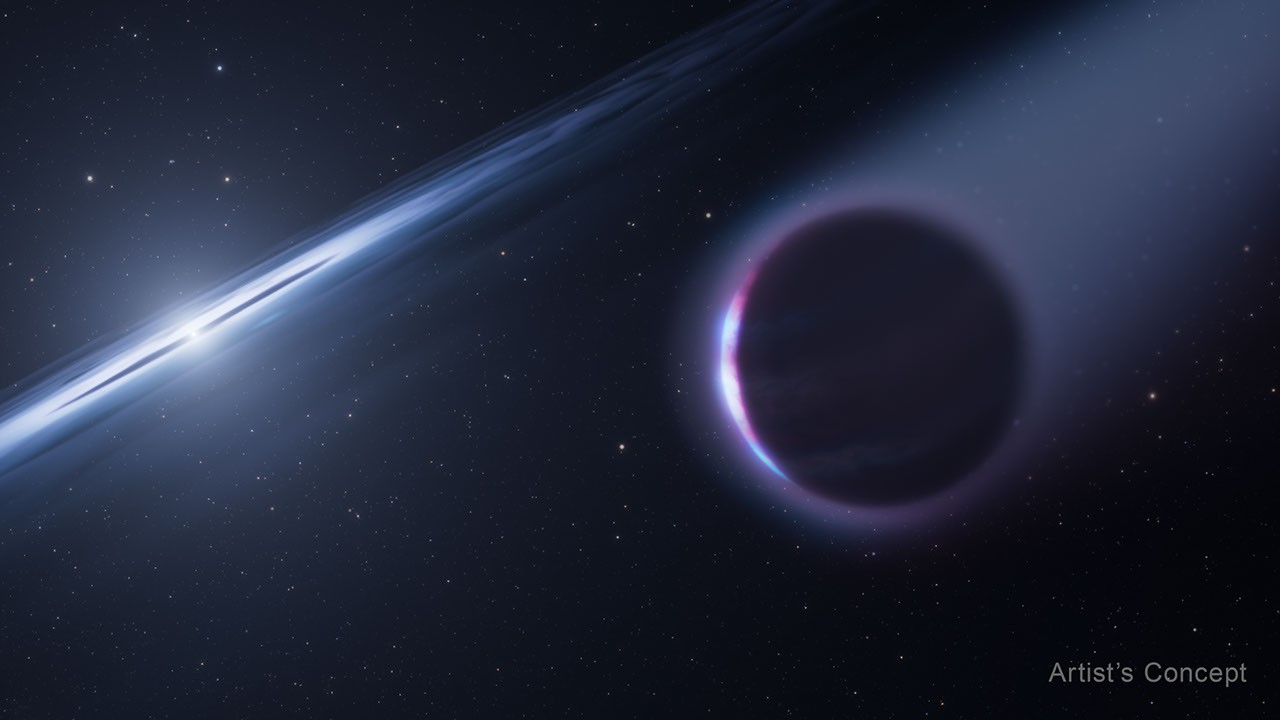
Astronomers have identified evidence of a second-generation planet orbiting the white dwarf star HS 0209+0832. The discovery stems from an analysis of archival data collected by the Hubble Space Telescope in 1999, which contained approximately 100 unidentified chemical features.
Researchers identified these features as niobium, an element synthesized during the death throes of stars. This finding suggests that the planet formed from material ejected by the star as it transitioned into a white dwarf, rather than from the original stellar birth material.
Data from the retired FUSE mission confirmed the presence of niobium. Additionally, observations from NASA’s TESS satellite over four months revealed periodic brightness variations, indicating a gas giant planet orbiting at a distance of approximately 3.7 million miles from the star.
The team theorizes the planet is roughly the size of Jupiter and is currently losing its atmosphere due to the intense energy of the young white dwarf. Scientists plan to use the Hubble telescope over the coming years to further investigate the formation and evolution of such systems.



