

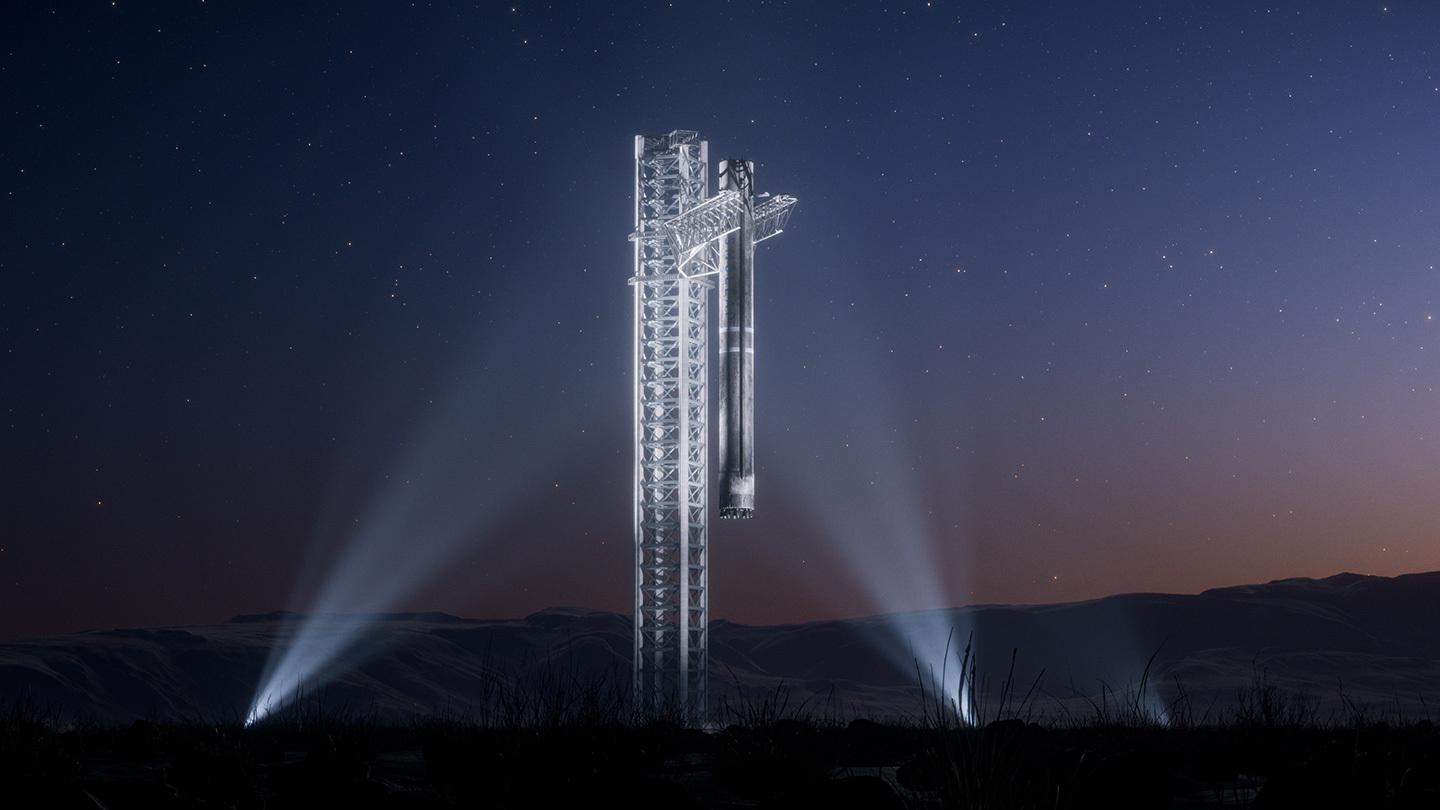
Chinese private aerospace firm Cosmoleap, also known as Dahang Yueqian, has completed static testing of the second-stage instrument bay for its Yueqian-1 rocket. The tests confirmed that the structural integrity, stiffness, and stability meet the design requirements. The company plans to conduct the first orbital launch of the vehicle in 2027.
During the testing phase, engineers simulated the mechanical loads encountered during flight, transportation, and ground operations. The team also verified the compatibility of the instrument bay with potential payloads. According to the developers, the experimental data demonstrated high alignment with the initial theoretical models.
The Yueqian-1 project features a unique recovery system for the first stage. Instead of using traditional landing legs, the rocket is designed to be caught by mechanical arms on the launch tower. This approach mimics the recovery method utilized by SpaceX for its Starship vehicle. Dahang Yueqian claims this is the first Chinese liquid-fueled rocket project to implement such a landing system.
The company notes that eliminating landing legs reduces the overall weight of the rocket, allowing for increased payload capacity. Furthermore, the tower-catch system is intended to minimize impact forces during landing, extend the service life of the stage, and prevent damage from exhaust plumes reflecting off the ground.
To further optimize performance, the developers have focused on reducing the mass of the second stage. The team redesigned the structural framework, decreased the number of load-bearing elements, and utilized composite materials for mounting sensitive equipment. These modifications are designed to lower structural weight and dampen vibrations affecting onboard electronics.
Dahang Yueqian was established in February 2024. The company focuses on the development of medium and heavy-lift reusable rockets equipped with intelligent control systems and tower-based recovery mechanisms.


