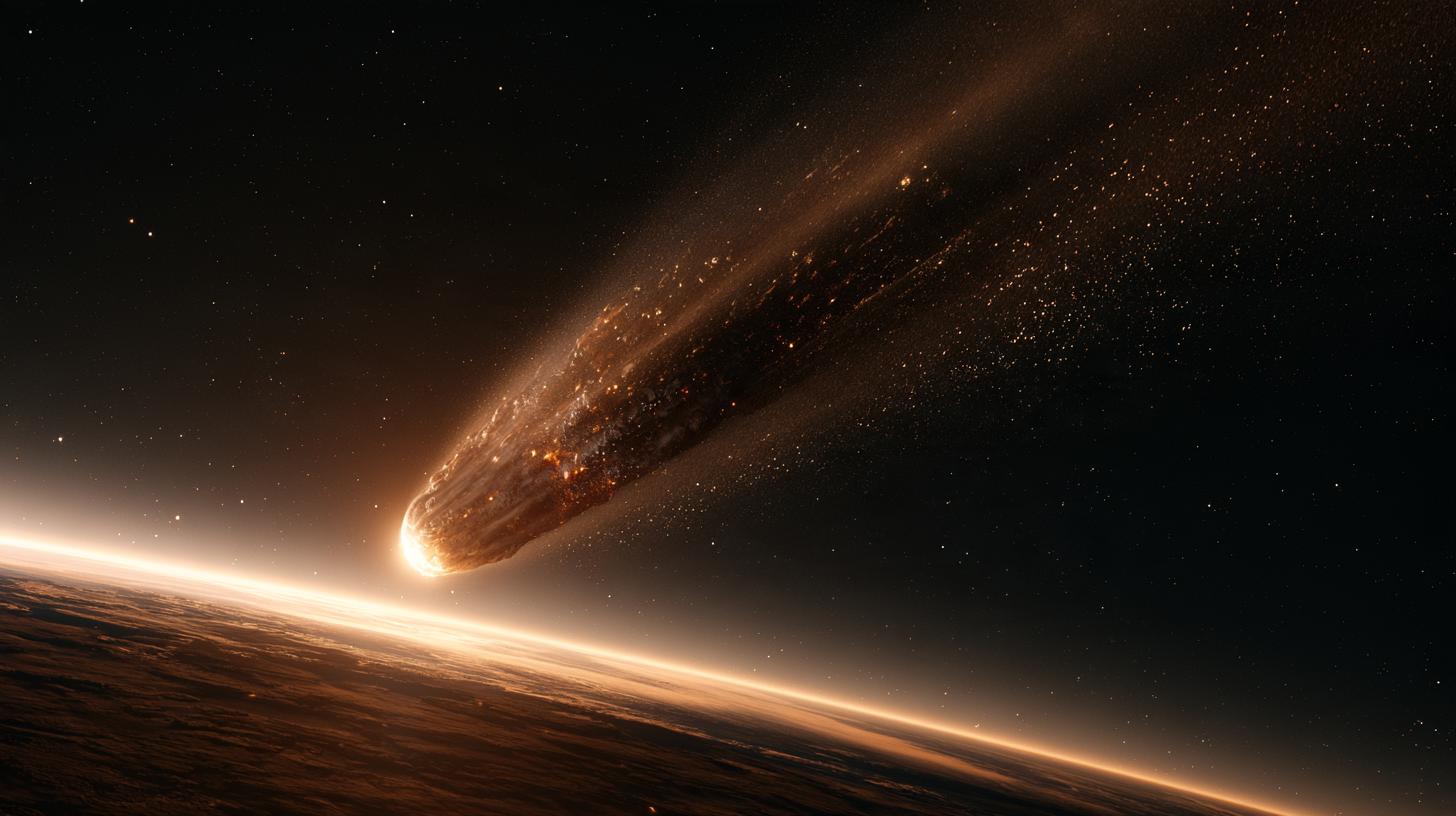
Researchers from the Crimean Astrophysical Observatory, the Institute of Astronomy, and the Special Astrophysical Observatory of the Russian Academy of Sciences have analyzed the interstellar comet 3I/ATLAS. The study reveals that the comet possesses a unique light signature, differing significantly from other objects like 2I/Borisov.
To interpret the data, scientists developed a model based on irregular dust particles. The findings indicate that the composition consists of 95% amorphous carbon, 4.5% magnesium-containing silicates, and 0.5% water ice. Photometric measurements show that the scattered light appears bluer in the short-wavelength range and redder in the long-wavelength range.
The observations were conducted using three Russian telescopes with diameters of 2, 2.6, and 6 meters. The data suggests that the comet maintained high dust activity even after passing its perihelion, the point in its orbit closest to the Sun. Experts note that the properties of the dust may evolve over time.