Researchers at RWTH Aachen University analyzed 115 electric motors from 80 electric vehicles produced between 2019 and 2025. The study, published in the journal Energies, compared drivetrain technologies from China, Europe, and the USA, focusing on design, materials, and manufacturing.
The analysis revealed that fundamental architectures, including housing structures and cooling concepts, remain largely similar across all three regions. However, manufacturers show distinct preferences in material usage. Chinese companies frequently utilize magnesium alloys for housings, whereas European manufacturers prefer aluminum.
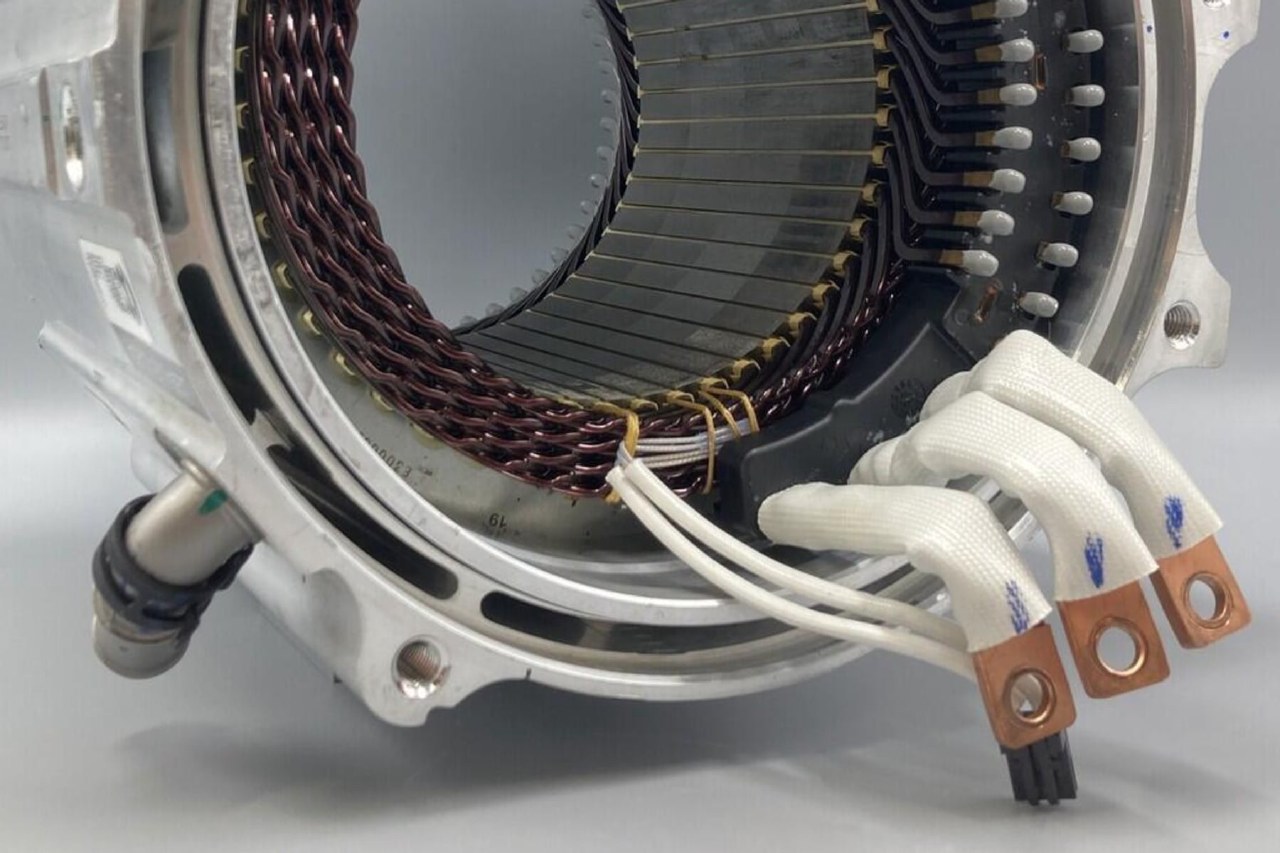
Significant differences were also noted in component assembly. Chinese producers often use powder-coated busbars, while European counterparts typically employ complex assemblies with copper bars embedded in polymer. Since 2022, there has been a clear industry-wide shift toward highly integrated units.
Performance metrics show a notable evolution in motor efficiency. The average peak power density of permanent magnet synchronous motors grew by nearly 45 percent, rising from 1.68 kW/kg in 2019 to 2.43 kW/kg in 2024–2025.
Technical advancements are driven by higher rotational speeds. While motors previously operated between 8,000 and 17,000 rpm, newer units often reach 20,000 rpm or more, with some peaking at 30,500 rpm. Additionally, average gear ratios increased by approximately 21.5 percent.
Cooling technology is also transitioning. While water jackets were standard in older models, newer designs increasingly incorporate direct oil cooling for rotors and stators. This shift necessitates more rigorous standards for sealing and component manufacturing processes.