

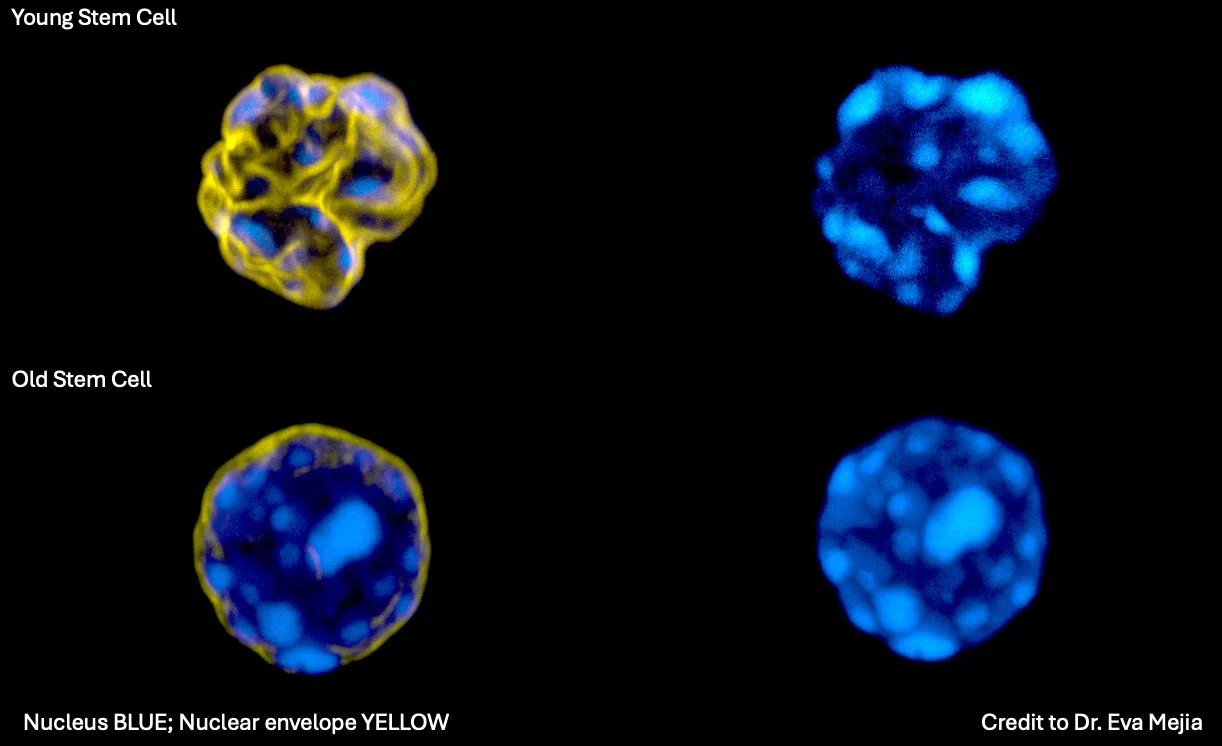
Researchers from the Bellvitge Biomedical Research Institute, the Barcelona Supercomputing Center, and the Barcelona Institute for Global Health developed an AI system named ChromAgeNet. The tool analyzes 3D images of cell nuclei to identify aging signatures within DNA structures.
The model was tested on mouse hematopoietic stem cells. It distinguishes between young and aged cells with approximately 77% accuracy, outperforming traditional machine learning models that rely on manually defined features.
ChromAgeNet evaluates chromatin organization, including the complexity of spatial arrangement, heterochromatin distribution near the nuclear periphery, and high-density chromatin clusters. These structural details are often invisible to the human eye.
In concept validation experiments, the system detected structural changes in stem cells treated with epigenetic drugs. While the tool identifies shifts toward youthful structural patterns, researchers noted this does not confirm functional rejuvenation of the cells.
The team made the ChromAgeNet model and associated 3D imaging data publicly available. The system utilizes DAPI staining, which is cost-effective and widely used, potentially enabling high-throughput screening for future drug and intervention research.



