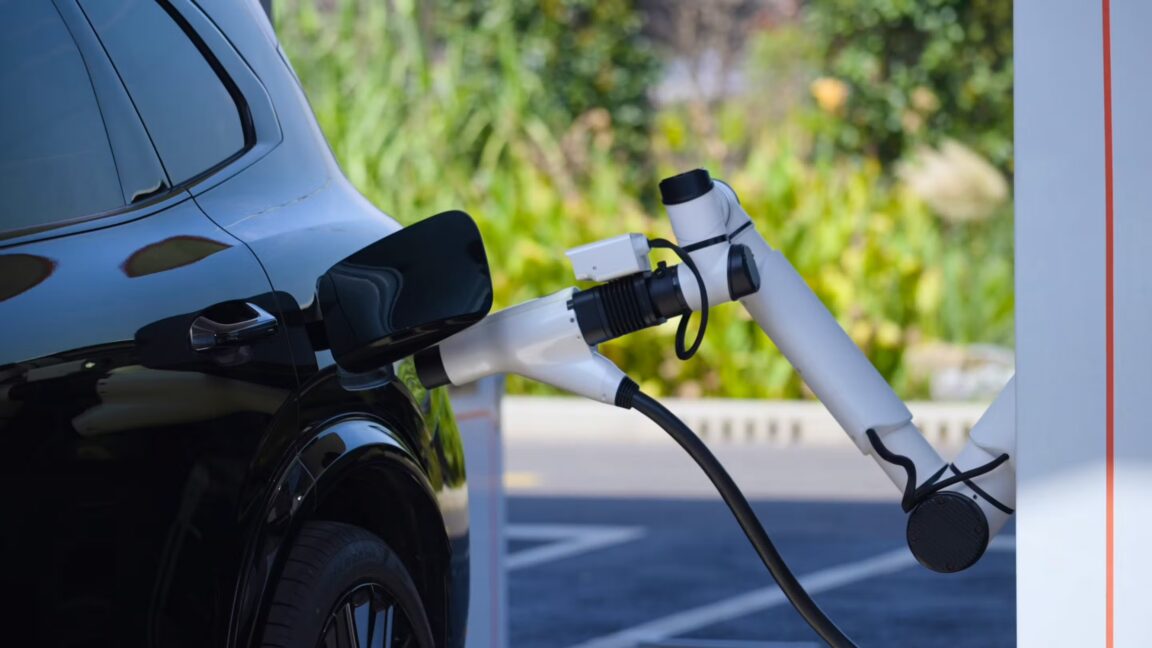
Geely has introduced a new battery system capable of charging at 2.2 MW. The technology allows a vehicle to charge from 10 to 70 percent in 4.5 minutes, and to 98 percent in 8 minutes 40 seconds. The system utilizes AI for predictive thermal management, maintaining an average pack temperature of 55 degrees Celsius and a peak of 65 degrees Celsius during the process.
To mitigate potential degradation from rapid charging, Geely uses AI-driven micro pulses to reactivate lithium ions at the negative electrodes, which reportedly extends battery life by 20 percent. This technology has already been tested in the Zeekr 001 and Lynk and Co 10 models, with potential future applications in Volvo or Lotus vehicles.
The competitive landscape in China includes BYD, which launched a battery in March capable of a 10 to 70 percent charge in 5 minutes. CATL remains a leader in this segment, having announced an LFP battery in April that reaches 80 percent charge in 3 minutes 44 seconds and 98 percent in 6 minutes 27 seconds.
In contrast, US charging infrastructure remains significantly slower. Most Tesla Superchargers are limited to 250 kW, while Electrify America stations max out at 350 kW. Newer IONNA chargers are rated for 400 kW, and ChargePoint offers a 600 kW unit. Current 800 V vehicles, such as the Hyundai Ioniq 5 and Porsche Taycan, have charging limits between 240 kW and 320 kW.
Megawatt-level charging in the US is currently restricted to heavy-duty vehicles like buses and semi-trucks. ChargePoint CEO Rick Willmer noted that their Express architecture can deliver 1.2 megawatts through a single port by combining two 600 kW units. However, such power levels require the use of an MCS connector rather than standard NACS or CCS1 ports.