

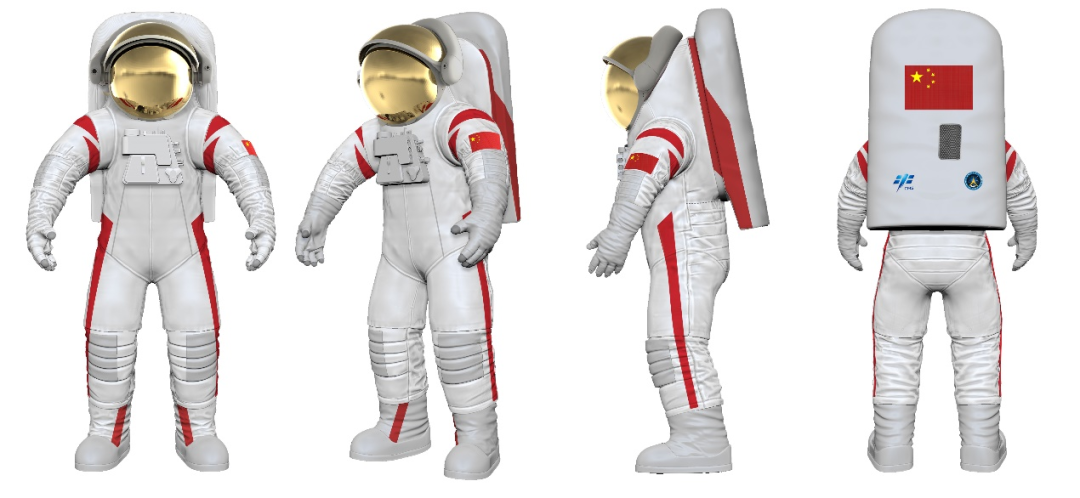
China has reached a globally advanced level in extravehicular spacesuit technology, according to the first Aerospace Medical Engineering Conference held in Tianjin. The development of the Wangyu lunar spacesuit is currently underway, with engineers having successfully overcome dozens of critical technical challenges since the project began in 2020.
The current second-generation Feitian spacesuit, used on the Chinese space station, has supported 27 extravehicular activities since its debut on July 4, 2021. Its operational lifespan has been extended to four years, allowing for at least 20 extravehicular missions per unit. Astronauts have already set a world record by performing a single spacewalk lasting nine hours.
The upcoming Wangyu lunar suit is designed to handle extreme lunar conditions, including vacuum, high temperature fluctuations, radiation, and lunar dust. It aims to be lightweight and compact while ensuring high safety standards. The suit will enable astronauts to perform complex tasks such as walking, climbing, driving, and conducting scientific research on the moon.
The national manned lunar exploration project is officially in progress, with the goal of landing Chinese astronauts on the moon before 2030. The development of the lunar suit remains a core priority for these future missions, building on the established research and development system created for the space station's extravehicular equipment.


