

China is currently leading the global development of nuclear energy to meet the surging power demands of artificial intelligence. More than half of the 58 nuclear reactors currently under construction worldwide are being built in China. The country is simultaneously investing in traditional nuclear power plants, small modular reactors (SMRs), and experimental fusion energy projects.
Data from Wood Mackenzie indicates that electricity consumption by Chinese data centers could quadruple to 774 TWh annually by 2030, driven primarily by AI computing requirements. Global electricity usage for data processing is projected to rise from approximately 460 TWh in 2022 to over 1000 TWh by the end of 2026, according to the International Atomic Energy Agency.
The startup Junhe Atomic, founded in 2025 by former executives from CNNC and CGN, plans to begin operating SMRs around 2031. The company intends to repurpose sites of former coal-fired power plants to utilize existing grid infrastructure. SMRs are designed for factory-based mass production and more compact deployment compared to traditional large-scale nuclear facilities.
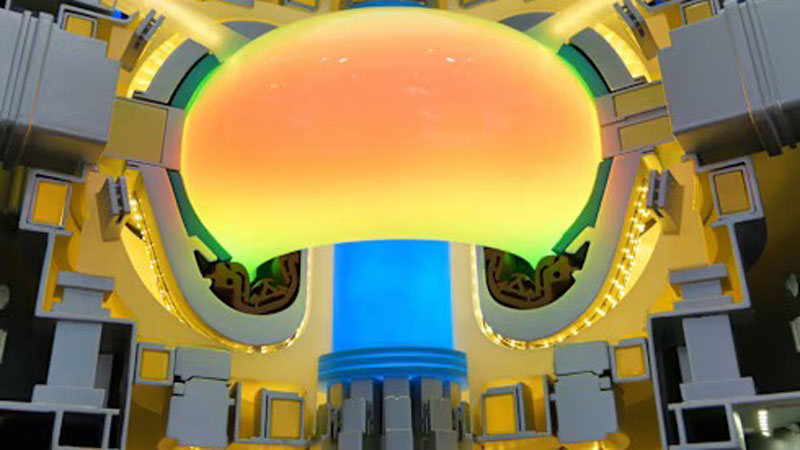
In the field of fusion energy, the company NovaFusionX is developing a reactor based on field-reversed configuration technology. The firm aims to achieve a positive energy output from a fusion reaction around 2030. Despite these efforts, Chinese experts estimate that commercial fusion power will not be viable in the country until at least 2050, as significant fundamental challenges remain.


