

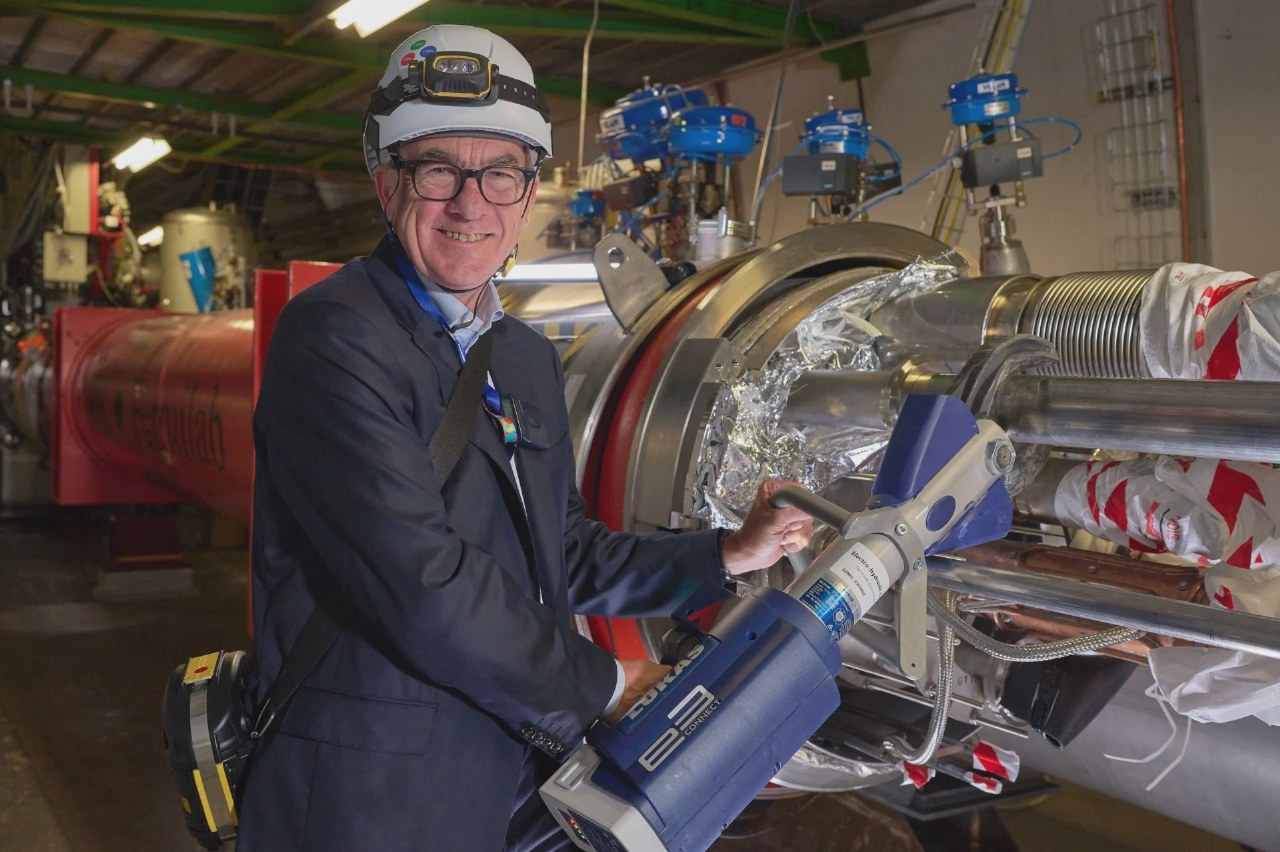
CERN has officially begun the third long-term shutdown (LS3) of the Large Hadron Collider (LHC), marking the start of a major upgrade to the High-Luminosity LHC (HiLumi LHC). The project involves the removal of 28 superconducting magnets, including the critical inner triplet magnet assemblies located near the ATLAS and CMS experiments.
The current inner triplet magnets, made of niobium-titanium, will be replaced by new units utilizing niobium-tin superconducting coils. These advanced components are designed to generate magnetic fields of up to 11.3 Tesla, representing a 40% increase in strength compared to existing hardware. This enhancement allows for tighter compression of particle beams, significantly boosting collision frequency.
The installation of the new equipment is scheduled to begin in early 2029, with the project requiring the integration of 16 cryostat systems and 28 cryogenic assemblies. While the ALICE and LHCb experiments will retain their current inner triplet magnets, they will undergo supporting upgrades to benefit from the overall increase in luminosity.
CERN Director-General Mark Thomson attended the commencement of the dismantling process at the ATLAS experimental site. The upgrade aims to provide researchers with substantially more data, enabling more precise measurements of the Higgs boson, investigations into dark matter, and the exploration of physics beyond the Standard Model.

