

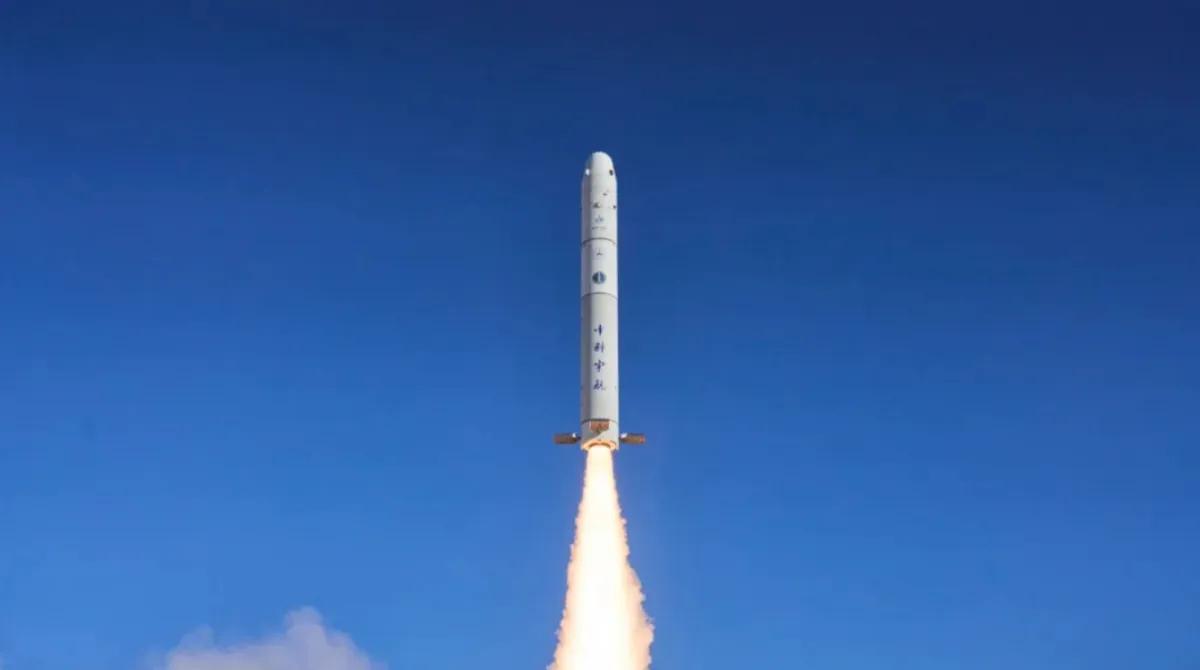
The Chinese commercial space company CAS Space has rescheduled the inaugural launch of its Lihong-2 reusable suborbital rocket to the first quarter of 2027. The mission will focus on protein crystallization and small-molecule drug experiments in collaboration with the Guangzhou Laboratory, which is responsible for the scientific program and sample analysis.
The 18-meter-long Lihong-2 rocket is designed to reach altitudes exceeding the 100-kilometer Karman line, providing over 180 seconds of microgravity. The vehicle has a launch mass of approximately 60 tons and utilizes liquid oxygen-kerosene engines, each producing about 30 tons of thrust. It can carry up to 3 tons of payload within an 8-cubic-meter volume.
CAS Space intends to reuse the first stage up to 30 times. The rocket also features a recoverable capsule for returning experiments to Earth. Additionally, the company is evaluating the PH-2 platform for suborbital space tourism, with a capacity for up to seven passengers, though no specific timeline for crewed missions has been established.
This project aligns with the 2025–2027 commercial space development plan set by the China National Space Administration. CAS Space is also developing the Lihong-3 orbital platform for long-term biomedical research, targeting a payload capacity of at least 300 kilograms with a scheduled debut in 2028.


