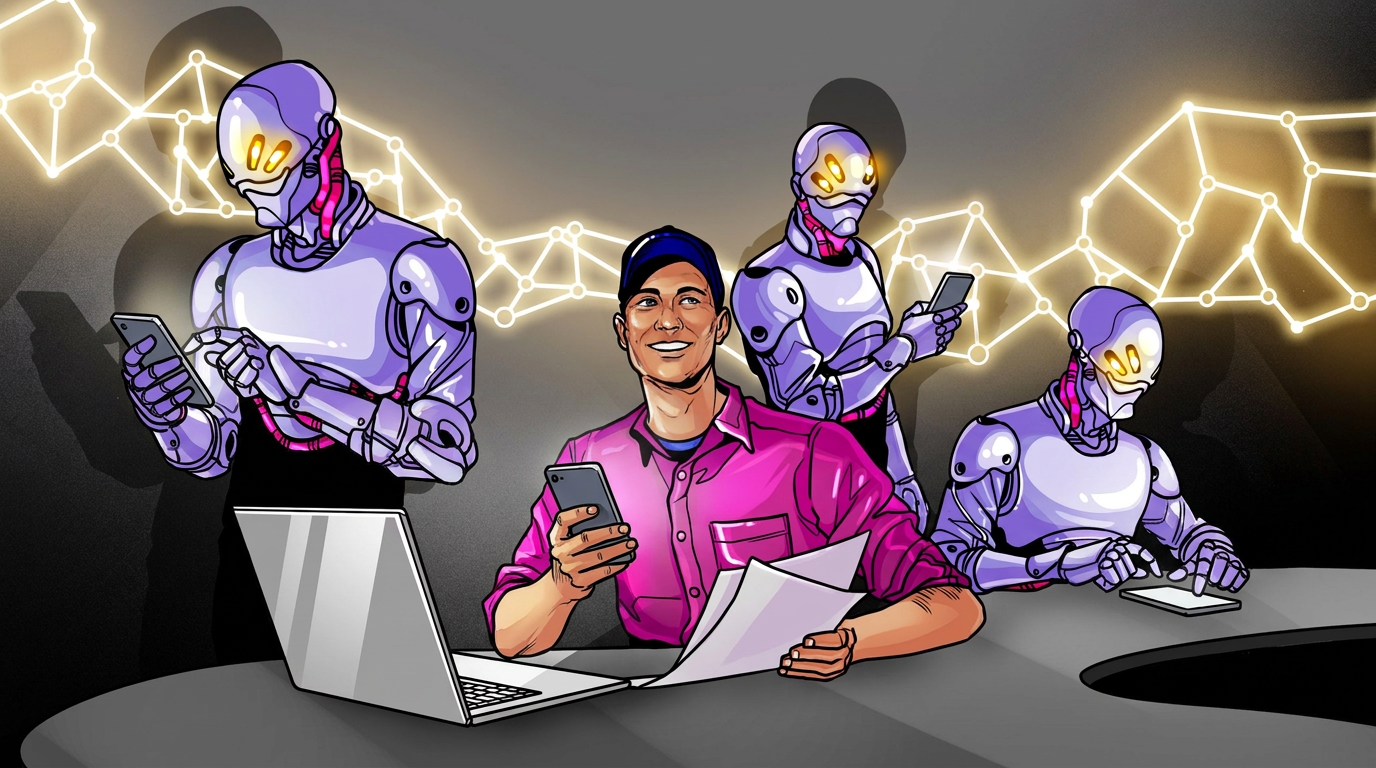
Decentralized AI networks are exploring the use of global smartphone capacity to create a distributed infrastructure layer. This approach aims to reduce reliance on centralized data centers, which face high construction costs of $38 billion for a single one-gigawatt facility.
Acurast has integrated over 335,000 smartphones into its network, with approximately 40,000 active daily. The project claims these devices provide computing power equivalent to 2,340 high-end data-center servers, specifically benchmarked against the ASUS RS720A-E11.
In October 2026, the project Phase launched Phase Proxy, enabling users to offer internet connectivity and blockchain validation for AI agents. The service plans to charge 0.5 USDT per 1,000 requests and 1GB of traffic, with future plans for a router to manage task distribution.
Technical challenges for these networks include device coordination, varying hardware specifications, and potential connectivity issues. Research from the University of California, San Diego, demonstrated that 20 retired smartphones could outperform standard cloud setups for specific tasks.
Economic models for these networks rely on incentive structures rather than fixed payments. Acurast participants receive rewards based on uptime and staked tokens, while Phase intends to use service revenue to purchase its native token for distribution to node operators.