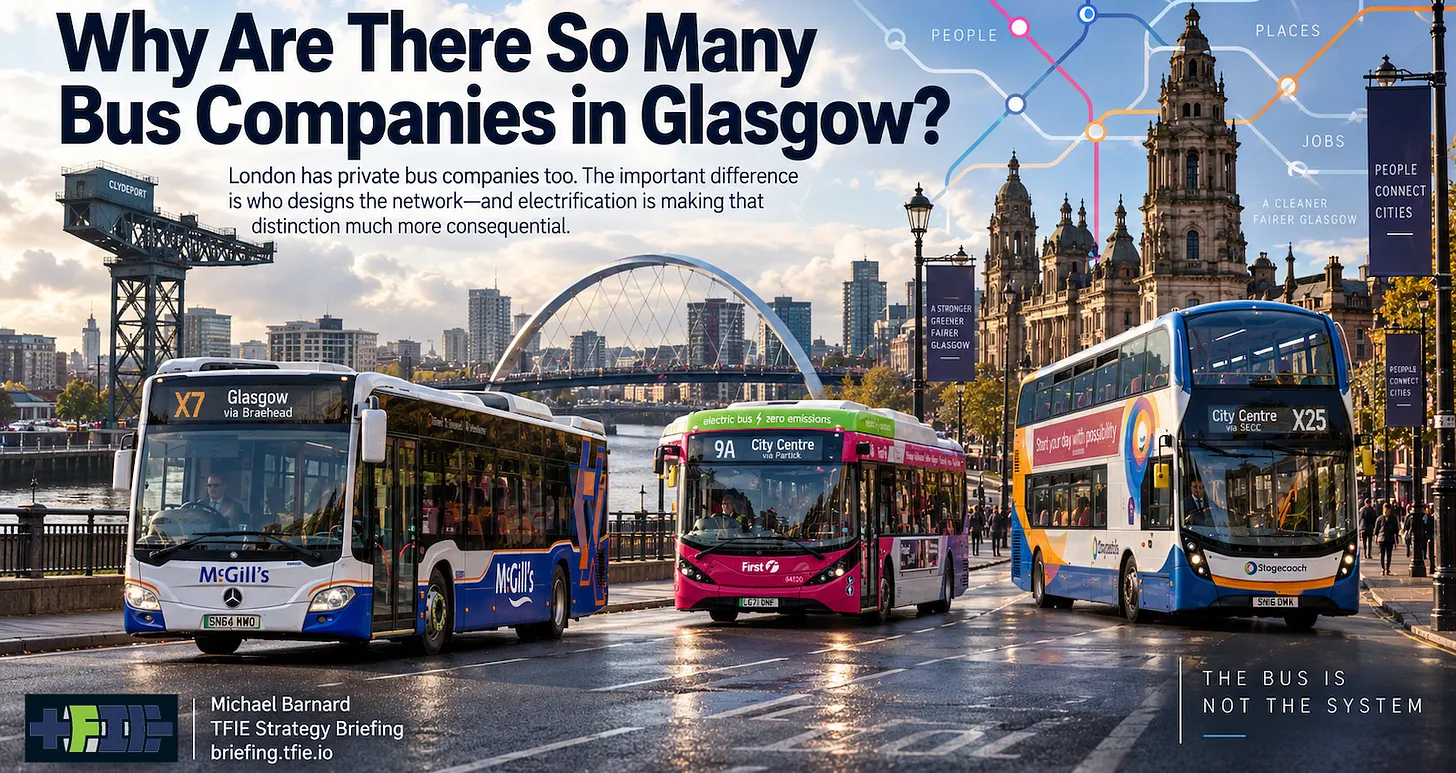
The British bus transport system has been shaped by the Transport Act 1985, which deregulated local bus services outside London starting in October 1986. This reform separated public operating businesses from authorities and led to their privatization, allowing commercial operators to independently register routes and timetables.
In contrast, London maintained a centralized model where the transport authority controls routes, fares, and service standards, while private companies compete for contracts to operate specific services. This approach ensures an integrated passenger network, whereas the deregulated model in areas like Glasgow relies on separate operators.
Research indicates that competition in both models successfully reduced operating costs. However, the transition to electric buses introduces new challenges, as charging infrastructure, grid connections, and depots are long-lived assets that are harder to relocate or reconfigure than traditional diesel operations.
Strathclyde Partnership for Transport is currently conducting a statutory franchising assessment for the Strathclyde region. This process explores shifting to a model where the authority specifies the network while private operators compete to deliver services, addressing concerns about long-term infrastructure planning.