Amazon currently employs over 1.5 million people globally while expanding its fleet of mobile robots and robotic arms. The company manufactures most of its robotics in-house in Massachusetts and plans to open new production facilities in Austin, Texas, and Greenwood, Indiana.
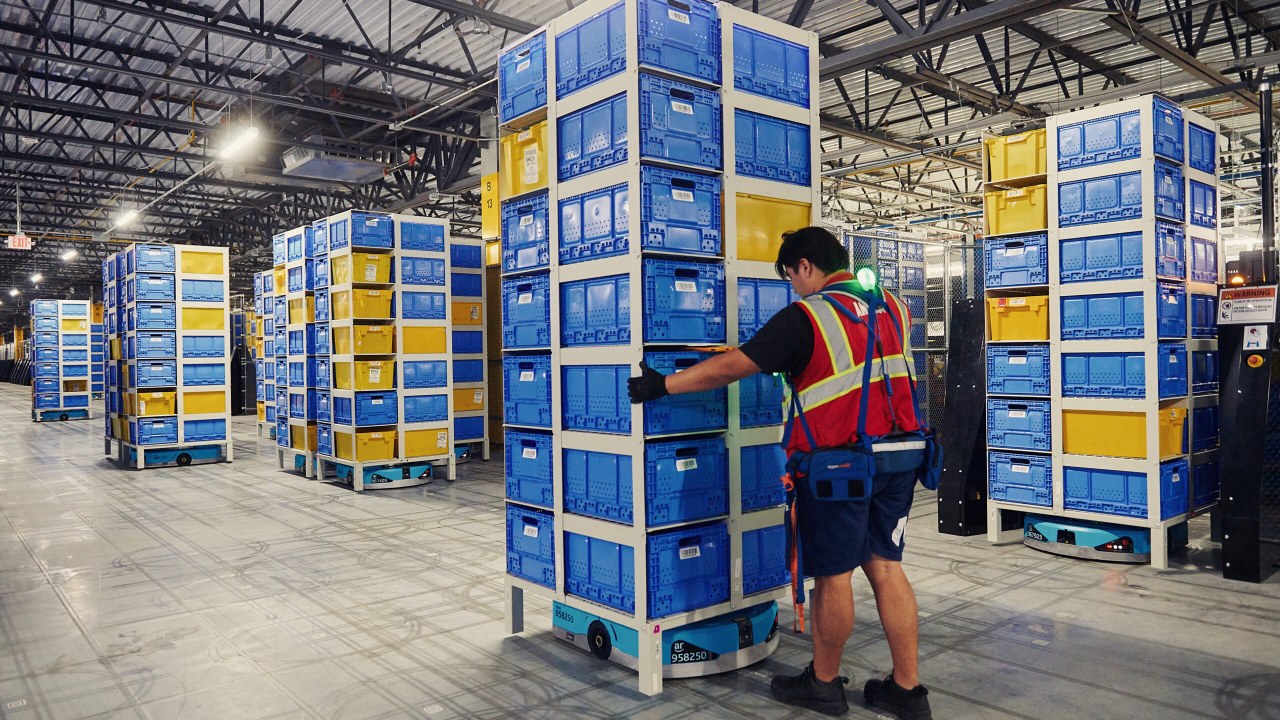
The company uses wheeled robots like Sequoia, Hercules, and Titan to manage inventory pods. To optimize movement and prevent congestion, Amazon employs the DeepFleet AI system. The newer Proteus robot features sensors for safe operation alongside human workers.
Amazon is rapidly scaling its robotic arm fleet, which currently numbers in the single-digit thousands. The company plans to more than double this count within the year. Key models include Robin for sorting, Cardinal for dense packing, and Sparrow for handling diverse product shapes.
The latest model, Vulcan, integrates vision with force feedback sensors to handle items in hard-to-reach areas. Deployed in 2025 in Spokane and Hamburg, the company expects to scale Vulcan usage by 2027. Machine learning models have significantly improved picking success rates.
While Amazon states that robots reduce physical strain on employees, labor groups report higher injury rates at robotic facilities. Data from 2017 to 2020 analyzed by the Strategic Organizing Center indicated that robotic warehouses experienced more workplace injuries than non-robotic ones.