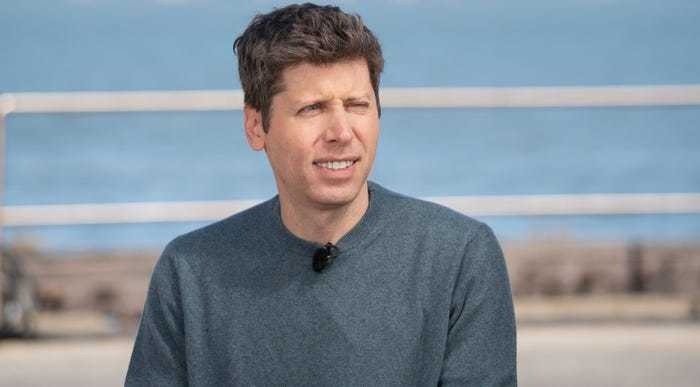
OpenAI CEO Sam Altman addressed students at Stanford University regarding the impact of artificial intelligence on the field of mathematics. He described a psychological transition for mathematicians, moving from initial disbelief and distress to anger, and finally to the acceptance of AI as an essential research tool.
The tension between OpenAI and the mathematical community intensified in September when OpenAI claimed its model solved a long-standing problem related to the Navier-Stokes equations. Critics, including researchers from New York University and Anthropic, questioned the data usage and the lack of transparent derivation processes in AI-generated solutions.
A controversy also emerged around a math competition organized by Caltech students, which aimed to use AI to solve complex problems. Following a protest letter signed by over 700 scholars who feared the promotion of AI-generated junk content, OpenAI withdrew its sponsorship. The event was subsequently modified and is scheduled for November.
UCLA professor Terence Tao noted that the romantic era of mathematical research is ending as experts shift from independent problem-solving to verifying AI outputs. OpenAI recently reported solving over 700 additional math problems, further fueling the debate over the changing nature of the profession.
Altman acknowledged that mathematics is experiencing the impact of AI more rapidly than other fields. Despite concerns about professional displacement, he remains optimistic about the future of the discipline, suggesting that AI will ultimately enable mathematicians to pursue more effective career paths.