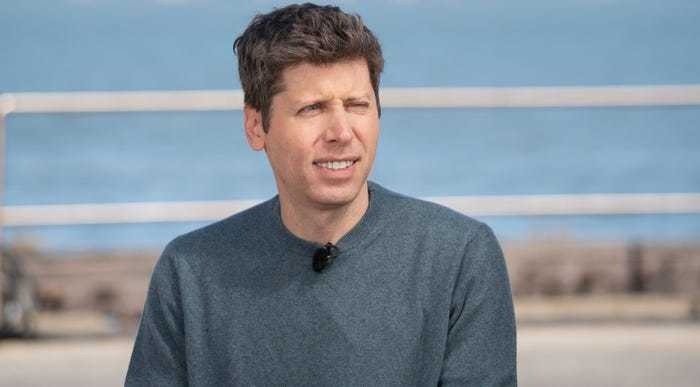
OpenAI CEO Sam Altman stated at a Stanford University event that mathematicians are shifting from initial pessimism toward accepting AI in research. Altman described this transition as a grieving process, moving from disbelief and anger to finding new career paths.
In September, OpenAI announced its model solved the Navier-Stokes equations, a long-standing mathematical challenge. This sparked controversy, as scholars from New York University and Anthropic accused the company of using their data without authorization. Critics also noted the model failed to provide a clear derivation process.
Tensions escalated when over 700 scholars signed an open letter condemning a Caltech student-led math competition for promoting low-quality AI content. OpenAI subsequently withdrew its sponsorship, and the organizers adjusted the event rules for the November competition.
Mathematician Terence Tao noted that the romantic era of mathematics has ended. He observed that top researchers are now adapting to a workflow focused on verifying AI outputs rather than solving problems independently. Following OpenAI's announcement of solving over 700 additional problems, Tao remarked that something is being lost.
Altman maintains an optimistic view on AI's impact, stating he does not foresee a job apocalypse. However, he acknowledged that the disruption in mathematics is occurring faster than in any other field he has observed.