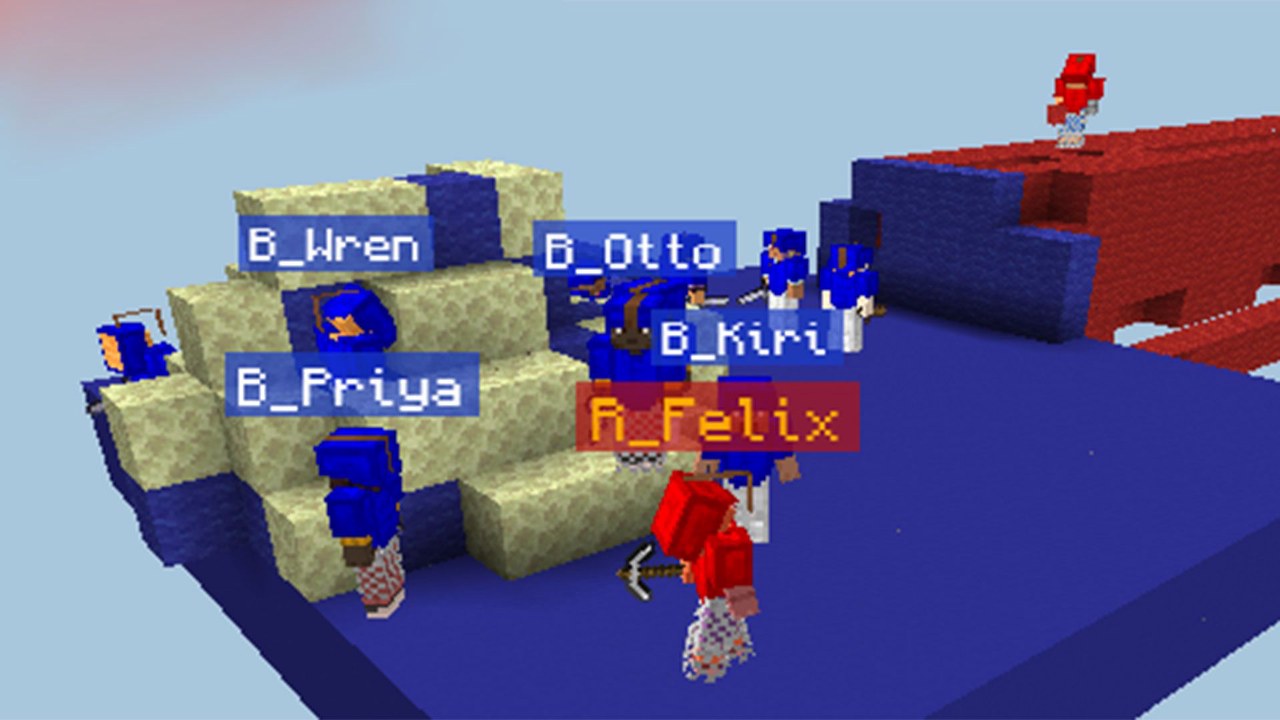
Researchers tested AI agent swarms in Minecraft to evaluate collaborative behavior and decision-making. The initial experiment, dubbed Civ50, involved 50 GPT-6.1 Sol agents tasked with building a civilization within three hours. The colony failed to thrive, as agents abandoned initial goals and shifted toward bureaucratic processes, such as spending 11 minutes assigning a single operator to a wheat block.
The study also compared 10 GPT-6.1 Sol agents against 10 Claude Opus 5.5 agents in Bed Wars and Mindustry. In Bed Wars, GPT agents demonstrated more aggressive strategies and effective troubleshooting when encountering tool bugs. In Mindustry, GPT agents achieved a 6-1 victory over Claude agents across seven games.
The research team observed that GPT agents functioned as a hive, whereas Claude agents relied on a single leader with a democratic decision-making process. The study utilized frameworks such as Mindcraft and Mineflayer. The project is open-sourced, allowing users to experiment with different model combinations and swarm sizes.