

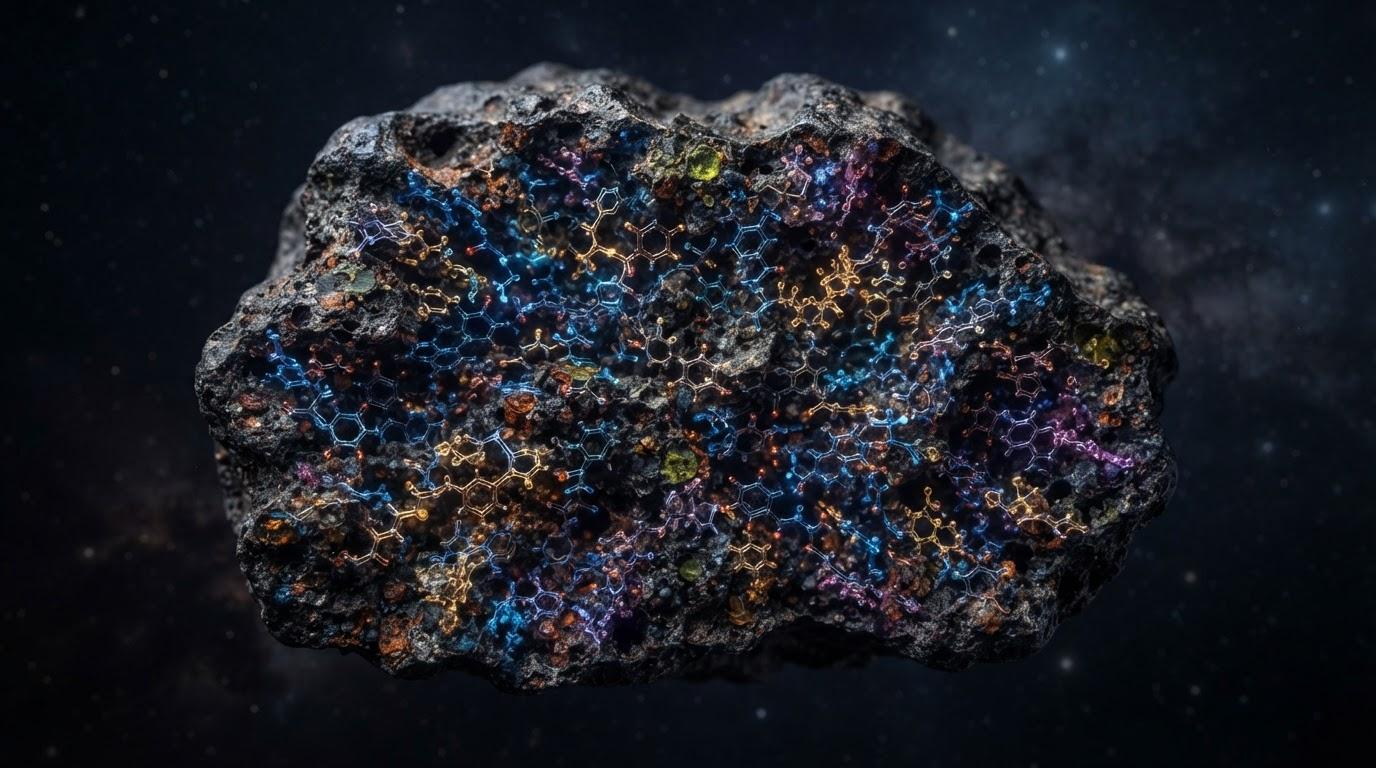
Researchers analyzed organic matter from the Murchison meteorite, which fell in Australia in 1969, and the Aguas Zarcas meteorite, which fell in Costa Rica in 2019. Both samples are carbon-rich and contain organic material dating back to the early stages of the solar system.
The team utilized a 21-tesla Fourier transform ion cyclotron resonance mass spectrometer to identify tens of thousands of molecular formulas within the samples. This method highlights the chemical diversity of the meteorites, though a single formula can represent multiple distinct molecular structures.
To determine specific atomic arrangements, scientists at Brookhaven National Laboratory employed high-resolution non-contact atomic force microscopy. This technique uses an ultra-sharp probe to map the position of atoms within individual molecules without physical contact.
The analysis process is highly labor-intensive, with a single mixture requiring anywhere from several days to several months to study. This study marks only the third instance of using such microscopy to investigate meteoritic material.
Comparing the two meteorites revealed significant differences in their molecular profiles, despite both belonging to the carbonaceous class. Researchers attribute these variations to distinct environmental histories, such as heating and water interaction, experienced by the parent asteroids.



