NASA Glenn Research Center utilizes specialized instrumentation to analyze airflow and sound dynamics. The facility employs tools such as particle image velocimetry, hot wire anemometry, Raman spectroscopy, and microphone phased arrays. These data points are essential for the global aviation community to validate noise reduction theories and predictive software.
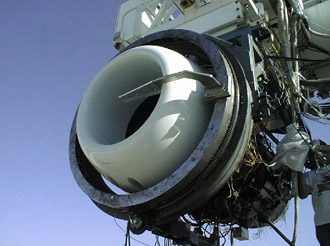
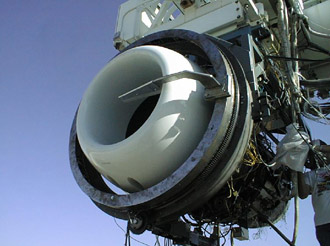
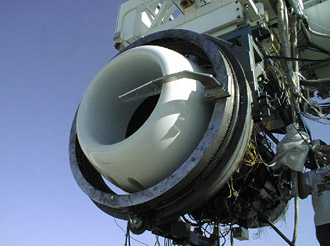
Engineers at the center developed the Rotating Rake Mode Measurement System (RRMS) to capture modal content in turbofan engines. This method, which uses rotating microphones, evolved from procedures pioneered in the 1990s. The equipment is deployed in various environments, including the 9- by 15-Foot Low Noise Wind Tunnel and during full-scale ground tests.
The facility also operates the Array48 microphone system, which arranges sensors in 1D, 2D, or 3D configurations to pinpoint noise sources. This system has been applied to scale-model jet flows and the F404 military engine. Furthermore, researchers use hotwire probes and Laser Doppler Velocimeters to record air velocity, helping to visualize disturbances between rotor and stator components.