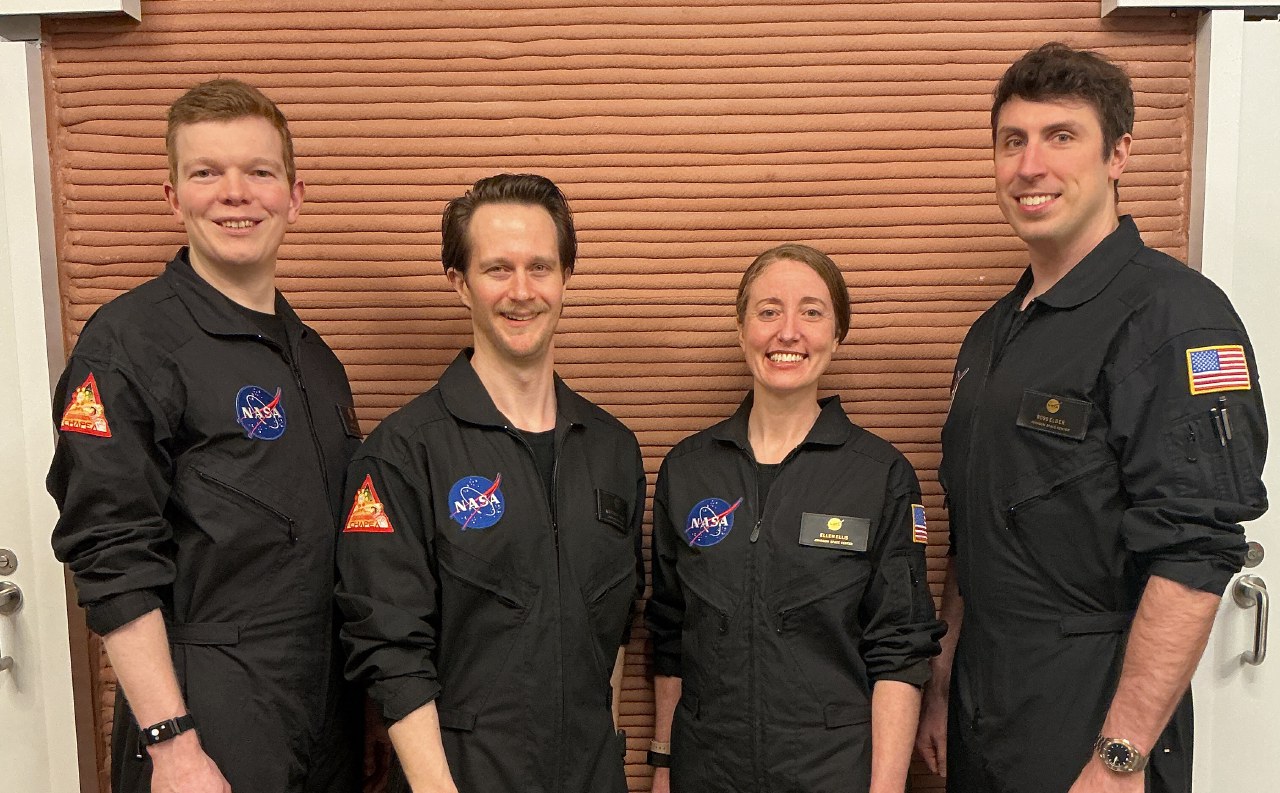
The crew of NASA’s CHAPEA Mission 2 has completed one year of isolation within a 1,700-square-foot 3D-printed habitat at the Johnson Space Center in Houston. The four-member team, which entered the facility on October 19, 2025, spent 365 days simulating life on Mars, including agricultural tasks, resource management, and extravehicular activities.
The mission participants include commander Ross Elder, medical officer Ellen Ellis, science officer Matthew Montgomery, and flight engineer James Spicer. Throughout the duration of the 378-day experiment, the crew navigated communication delays and limited contact with their families, relying primarily on email correspondence.
NASA scientists have been collecting health and performance data to prepare for future long-duration spaceflight. The research focuses on how crews adapt to isolation, limited resources, and communication delays of up to 45 minutes each way. This information is intended to support the development of medical and psychological care protocols.
The mission is scheduled to conclude on October 31, when the crew exits the habitat. Following their departure, the participants will undergo two weeks of post-mission evaluations and debriefs. These findings will contribute to the Human Research Program’s efforts to improve astronaut safety and productivity for future missions to the Moon, Mars, and beyond.