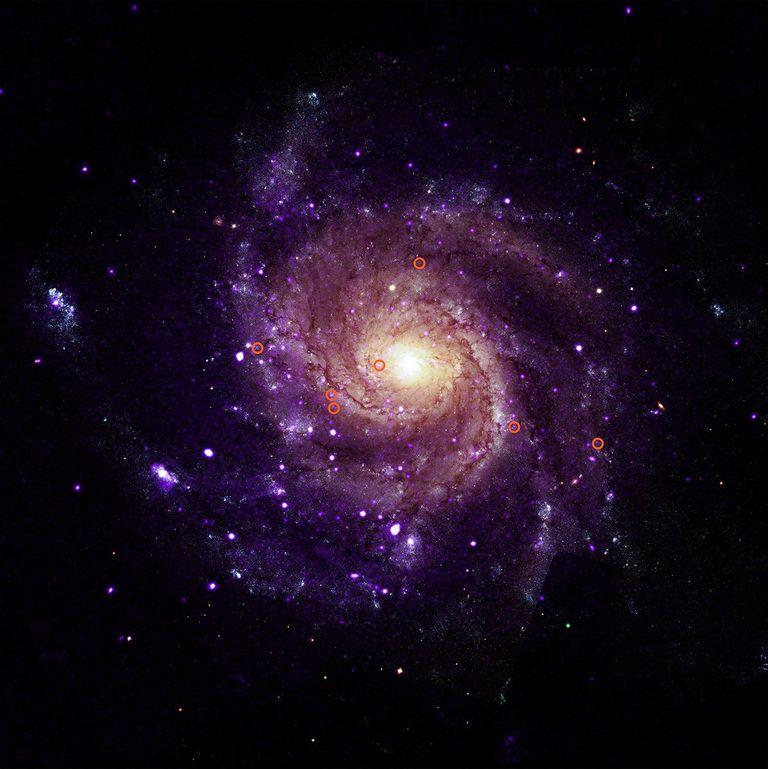
Chandra Observatory maps the impact of a supernova on the galactic center
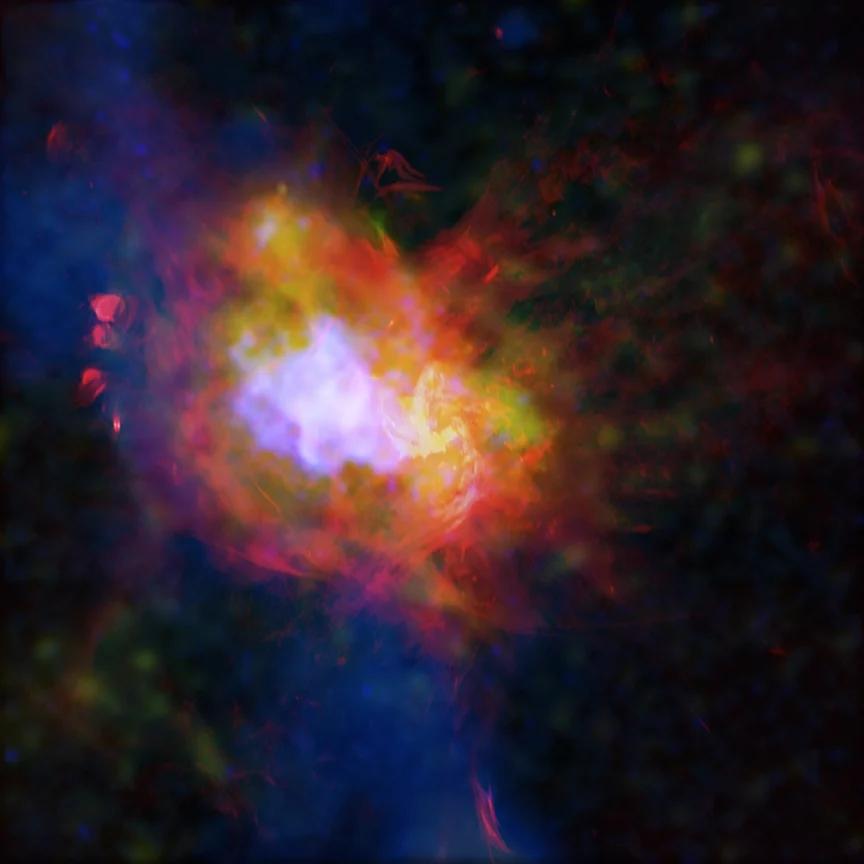
The Chandra X-ray Observatory has mapped the Milky Way's center, revealing how a 10,000-year-old supernova remnant reshaped the environment around the central black hole.

The Chandra X-ray Observatory has mapped the Milky Way's center, revealing how a 10,000-year-old supernova remnant reshaped the environment around the central black hole.

A new mathematical model suggests that standard supernovae, rather than hypernovae, may explain the unusual chemical composition of ancient stars in the Milky Way.

University of Copenhagen researchers found that neutrino flavor transformation determines whether a massive star ends as a supernova or collapses into a black hole.

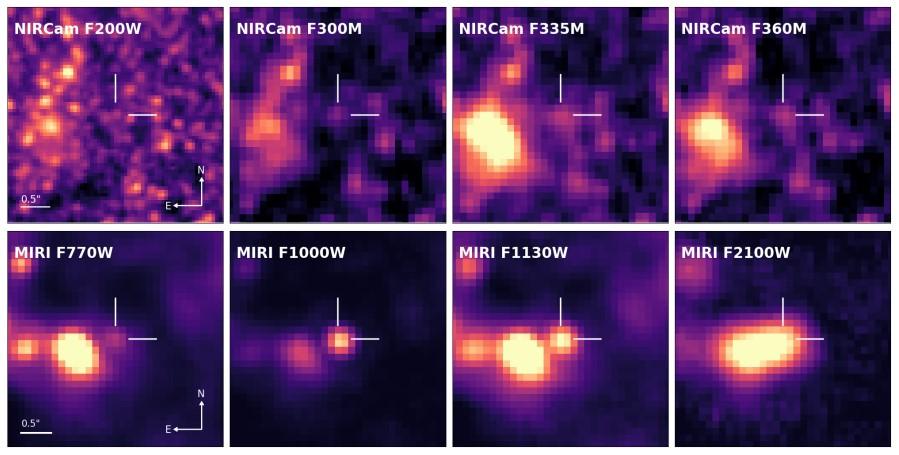
The James Webb Space Telescope has identified a massive, ancient dust reservoir surrounding the SN 1983V supernova, providing new insights into post-explosion environments.

Researchers using the Chandra X-ray Observatory have discovered 84 hypersoft X-ray sources that could explain the origins of Type Ia supernovae and the ionization of interstellar gas.