

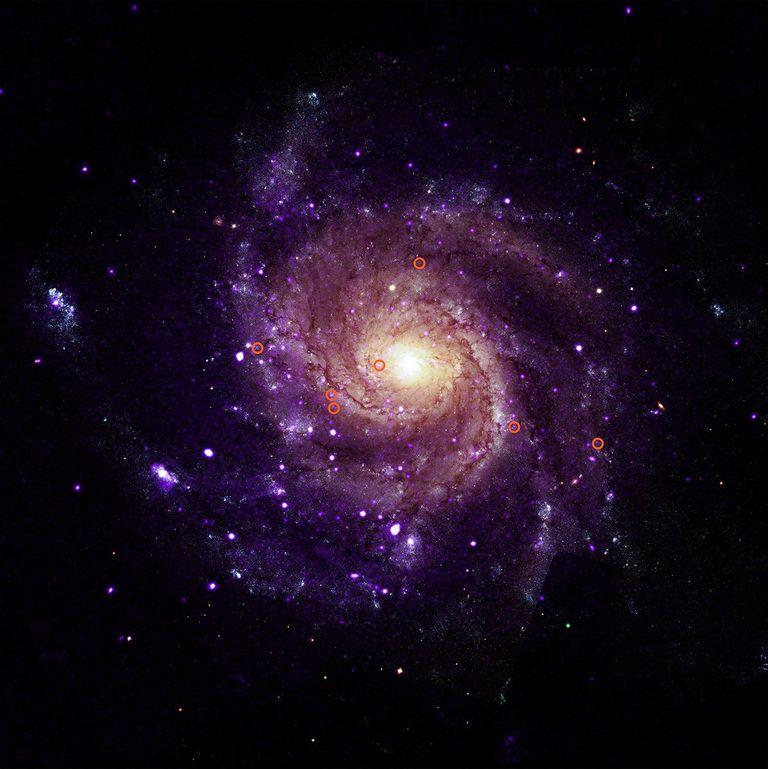
Astronomers analyzing data from the Chandra X-ray Observatory have identified 84 unique cosmic objects across six galaxies, including the Andromeda and Pinwheel galaxies. These objects, termed hypersoft X-ray sources, emit intense ultraviolet radiation while producing an unusually weak X-ray signal limited to the low-energy spectrum.
The research team, led by Mustafa Mohibullah from the University of Alabama, notes that these sources were previously difficult to detect due to their faint X-ray signatures and the absorption of ultraviolet light by interstellar hydrogen and helium. Potential candidates for these objects include black holes, neutron stars, or white dwarfs accreting matter.
These hypersoft sources may help resolve two major astrophysical mysteries. First, they are considered potential candidates for the progenitors of Type Ia supernovae, which are crucial for measuring the expansion of the universe. Astronomers have long sought to observe these binary systems directly before the stars explode.
Second, the intense ultraviolet radiation from these objects could explain the ionization of interstellar gas, a process that cannot be fully accounted for by massive stars alone. Given the discovery of dozens of these sources in just six galaxies, researchers believe a vast population of such systems likely exists throughout the universe.


